

Resisting Erasure: Capital, Imperialism and Race in Palestine
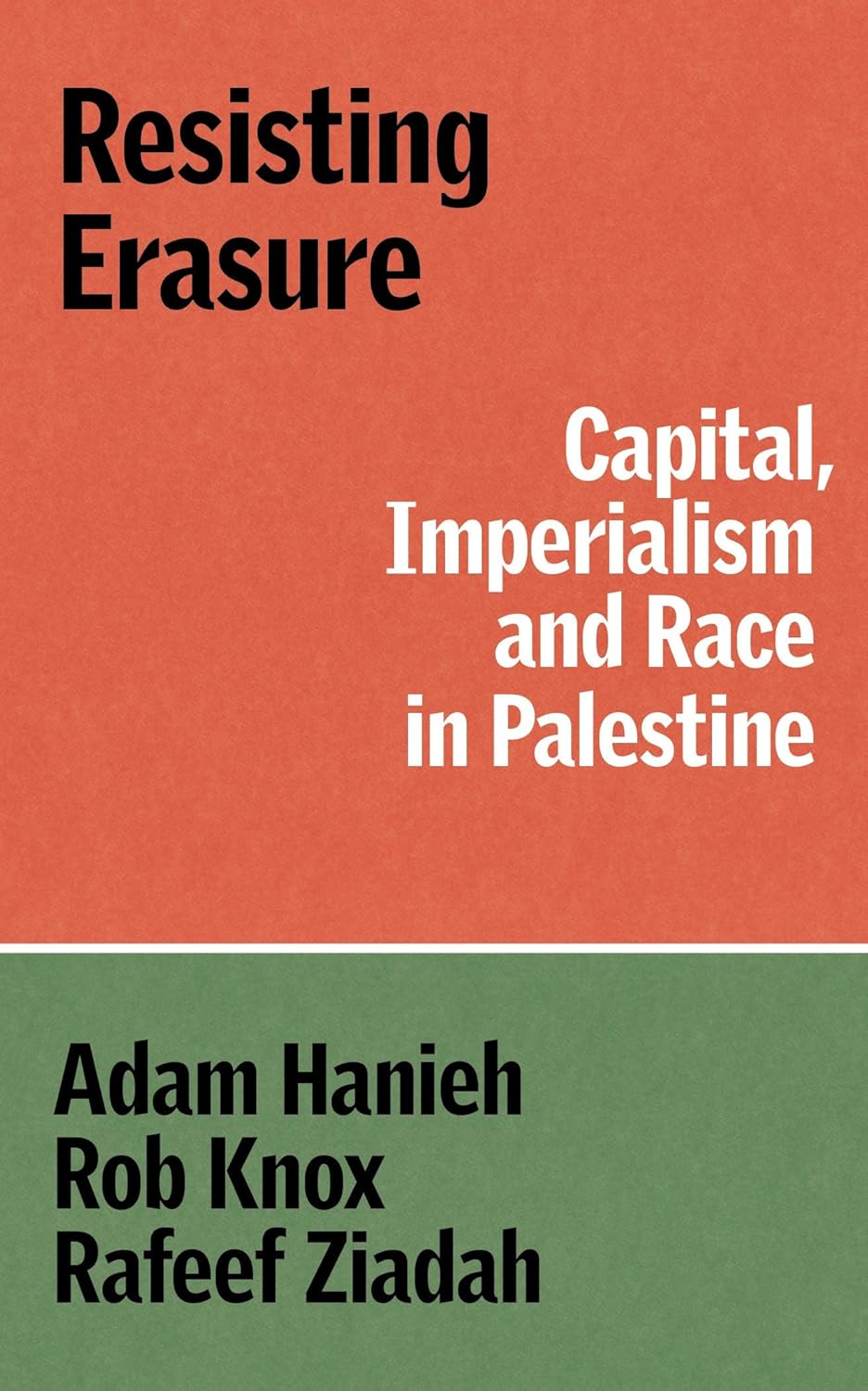

Resisting Erasure: Capital, Imperialism and Race in Palestine
EGP1,130.00
A materialist analysis of the links between global capitalism, energy politics, and racial oppression in Palestine
Why has Palestine become a defining fault line of contemporary politics?
Challenging mainstream narratives that reduce Palestine to ancient hatreds, humanitarian tragedy, or legal abstractions, Resisting Erasure places Israeli settler-colonialism within the broader historical arc of imperialism, race, and fossil capitalism in the Middle East.
Resisting Erasure is a succinct and far-reaching critique of the socio-economic and political forces that sustain the Israeli settler-colonial project. An essential introduction for anyone looking to understand what Palestine reveals about the world – and what it demands of us today.
3 in stock
Resisting Erasure: Capital, Imperialism and Race in Palestine
Resisting Erasure: Capital, Imperialism and Race in Palestine Book Description
Resisting Erasure: Capital, Imperialism and Race in Palestine offers a clear, materialist view of how global capitalism, energy politics, and racial oppression intersect in the Palestinian context. Readers will discover why Palestine has become a pivotal fault line in today’s politics. The book challenges simplified narratives that paint the conflict as ancient hatred or mere humanitarian tragedy. Instead, it places Israeli settler‑colonialism within a larger history of imperialism, race, and fossil‑fuel capitalism across the Middle East. This concise critique reveals the socioeconomic forces that sustain the settler‑colonial project.
Throughout the text, the author connects energy geopolitics to daily life in Palestine. Meanwhile, the analysis shows how profit‑driven policies fuel ongoing displacement. Moreover, the work explains how race operates alongside economics to shape power structures. Readers can see how these dynamics affect both local communities and global markets. Because of this, the book serves as a valuable lens for anyone seeking to understand the broader implications of the conflict.
Fans of political theory and contemporary history will appreciate the book’s accessible style. Additionally, the narrative equips readers with the tools to critique mainstream media portrayals. Furthermore, each chapter builds on the last, creating a coherent picture of oppression and resistance. Therefore, the text not only informs but also inspires critical thought about global justice.
Key Features of Resisting Erasure: Capital, Imperialism and Race in Palestine
The book blends rigorous research with engaging storytelling. Inside, you will find case studies that illustrate the link between oil extraction and land dispossession. Also, the author uses vivid examples to make complex ideas easy to grasp. Moreover, each section ends with discussion questions that encourage deeper reflection. Readers will appreciate the balance between scholarly insight and readable prose.
Another standout feature is the focus on contemporary relevance. Consequently, the book connects historical patterns to current events, showing how past imperialist strategies resurface today. Additionally, the author highlights grassroots movements that challenge these structures. This emphasis on activism offers a hopeful perspective amid the analysis.
Why Read This Book?
Many readers seek to understand the root causes of the Israeli‑Palestinian conflict. This book provides that foundation without jargon. It helps you see the bigger picture of how capitalism and race shape geopolitical struggles. Because of its clear explanations, you can discuss the topic confidently in academic or casual settings. Furthermore, the insights gained can inform your own views on global inequality and environmental justice.
Readers will also benefit from a fresh narrative that moves beyond victim‑perpetrator binaries. Instead, the text invites you to explore systemic forces and consider pathways for change. Therefore, buying this book adds a critical resource to any personal or classroom library.
About This Book
For more details about the author and reviews, visit the Goodreads page. You can also explore other top English titles in our store by following this link. Enjoy a thought‑provoking read that challenges conventional wisdom and deepens your understanding of Palestine’s role in the world.
| Author |
|---|
Only logged in customers who have purchased this product may leave a review.
Product Related

Out of stock

Out of stock

Out of stock

Out of stock
EGP190.00
Reviews
There are no reviews yet.