

Understanding the Public Sector in Egyptian Cinema: A State
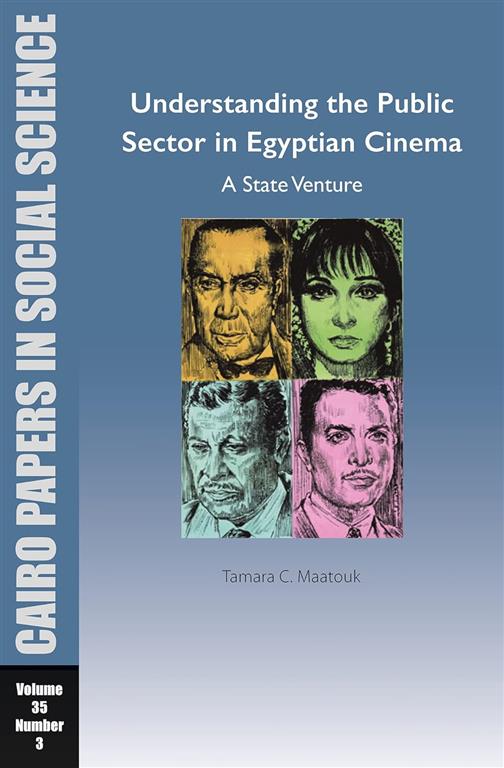


Understanding the Public Sector in Egyptian Cinema: A State
EGP200.00
Public and government attitudes to the role of the public sector in Egyptian cinema
In 1957 the public sector in Egyptian cinema was established, followed shortly by the emergence of public-sector film production in 1960, only to end eleven years later, in 1971. Assailed with negativity since its demise, if not earlier, this state adventure in film production was dismissed as a complete failure, financially, administratively and, most importantly, artistically. Although some scholars have sporadically commented on the role played by this sector, it has not been the object of serious academic research aimed at providing a balanced, nuanced general assessment of its overall impact.
This issue of Cairo Papers hopes to address this gap in the literature on Egyptian cinema. After discussion of the role played by the public sector in trying to alleviate the financial crisis that threatened the film industry, this study investigates whether there was a real change in the general perception of the cinema, and the government’s attitude toward it, following the June 1967 Arab–Israeli war.
1 in stock
Understanding the Public Sector in Egyptian Cinema: A State
Understanding the Public Sector in Egyptian Cinema: A State Book Description
Readers will discover a fresh look at Egypt’s film history in Understanding the Public Sector in Egyptian Cinema: A State. This English‑language study, available at Kalimat Bookstore Online, examines the rise and fall of state‑run film production from 1957 to 1971. It offers a clear narrative that blends political context with cinematic analysis, making a complex era accessible to a broad audience.
Inside the book, the author traces how the public sector emerged in 1960 as a response to a financial crisis that threatened local studios. Meanwhile, the study explores whether the June 1967 Arab–Israeli war shifted government attitudes toward cinema. Furthermore, it evaluates the artistic quality of state‑produced films, challenging the long‑held belief that the venture was a total failure.
Throughout the chapters, readers can compare official policies with public opinion, revealing a nuanced picture of cultural control and creative expression. Additionally, the work draws on rare archival sources, giving fresh evidence that scholars have rarely cited.
Key Features of Understanding the Public Sector in Egyptian Cinema: A State
Each chapter begins with a concise summary, helping readers quickly grasp the main arguments. Moreover, the book includes timelines that map key events, production milestones, and political shifts. Readers will also appreciate the inclusion of film stills and production documents, which bring the era to life.
The author employs a balanced tone, avoiding jargon while still providing scholarly depth. Consequently, students, film enthusiasts, and casual readers alike can enjoy a clear, engaging analysis. Finally, a dedicated bibliography offers pathways for further research, making the book a valuable reference tool.
Why Read This Book?
Fans of cinema history will enjoy the vivid storytelling that connects policy decisions to on‑screen outcomes. The guide reveals how state funding both rescued struggling studios and imposed artistic limits. Additionally, the book highlights lesser‑known filmmakers who thrived under state support, offering readers fresh perspectives on Egyptian cultural heritage.
Many readers find the study’s focus on perception especially compelling. It asks whether the public’s view of cinema improved after 1967, and it provides evidence that attitudes did shift, albeit gradually. Therefore, the book not only fills a gap in academic literature but also invites readers to reconsider widely held assumptions.
About This Book
More detail about this book and its author can be found on Goodreads. Explore additional English titles in our store through the English Books section.
| Author |
|---|
Only logged in customers who have purchased this product may leave a review.
Product Related

Out of stock

Out of stock
EGP1,305.00

Out of stock
EGP280.00

Out of stock
EGP605.00
Reviews
There are no reviews yet.