

Information Graphics

Information Graphics
EGP1,550.00
(2020) “If you can’t explain it simply, you don’t understand it well enough.”
-Albert Einstein
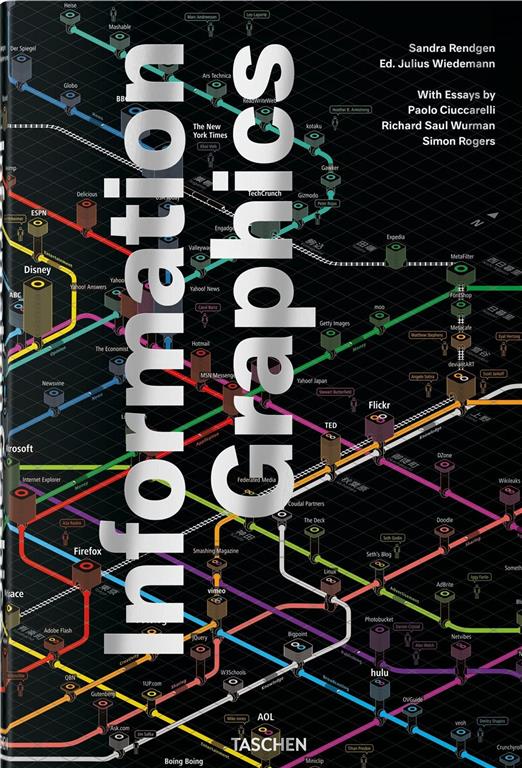
Our everyday lives are filled with a massive flow of information that we must interpret in order to understand the world we live in. Considering the complex variety of data floating around us, sometimes the best-or even only-way to communicate is visually. This unique book presents a fascinating perspective on the subject, highlighting the work of the masters of the profession, creators of breakthroughs that have changed the way we communicate. Information Graphics has been conceived and designed not just for graphics professionals, but for anyone interested in the history and practice of communicating visually.
The in-depth introductory section, illustrated with over 60 images (each accompanied by an explanatory caption), features essays by Sandra Rendgen, Paolo Ciuccarelli, Richard Saul Wurman, and Simon Rogers. Looking back all the way to primitive cave paintings as a means of communication, this section gives readers an excellent overview of the subject. The second part of the book is entirely dedicated to contemporary works by today’s most renowned professionals, presenting 200 graphics projects, with over 400 examples-each with a fact sheet and an explanation of methods and objectives-divided into chapters by the topics Location, Time, Category, and Hierarchy.
Includes:
200 projects and over 400 examples of contemporary information graphics from all over the world-ranging from journalism to art, government, education, business and much more
Four essays about the development of information graphics since its beginnings
Out of stock
Information Graphics
Information Graphics Book Description
Information Graphics is a captivating English-language book that invites readers to explore how visual storytelling transforms complex data into clear insight. Published in 2020, it follows Albert Einstein’s advice: “If you can’t explain it simply, you don’t understand it well enough.” Today we face a flood of information, and this book shows why visual communication often proves the most effective solution.
Inside, the author traces the evolution of visual communication from primitive cave paintings to modern data‑driven designs. The introductory section features more than 60 full‑color images, each paired with a concise caption. Essays by Sandra Rendgen, Paolo Ciuccarelli, Richard Saul Wurman, and Simon Rogers enrich the narrative, offering expert perspectives on the history and practice of information graphics.
Meanwhile, the second half of the book highlights contemporary achievements. It presents 200 outstanding graphic projects and over 400 examples from fields such as journalism, art, government, education, and business. Each example includes a fact sheet that explains the methods, objectives, and impact of the design, allowing readers to learn practical techniques while appreciating artistic innovation.
Key Features of Information Graphics
Readers will discover a well‑organized collection of case studies grouped by four core themes: Location, Time, Category, and Hierarchy. This structure makes it easy to compare approaches and see how designers solve similar problems in different contexts. Additionally, the book offers four in‑depth essays that examine the development of information graphics from its earliest forms to today’s cutting‑edge practices.
Furthermore, the visual content is not limited to professionals. The clear explanations and approachable language help anyone interested in visual communication, whether you are a student, marketer, or curious hobbyist. The book also includes tips on creating effective visuals, making it a valuable reference for future projects.
Why Read This Book?
Fans of design will enjoy the rich illustrations and behind‑the‑scenes stories of pioneering creators. The guide encourages readers to think critically about how data can be presented in an engaging way, fostering better decision‑making in personal and professional life. Moreover, the book’s balanced mix of theory and real‑world examples ensures that concepts are both understandable and applicable.
Many readers appreciate the seamless blend of history, theory, and practice. By exploring the evolution of information graphics, you gain perspective on why certain visual strategies succeed. Therefore, this book not only informs but also inspires you to experiment with your own visual projects.
About This Book
For more details about Information Graphics and its author, visit the Goodreads page. Explore the best English books available at Kalimat Bookstore Online through our English Books collection.
| Author |
|---|
Only logged in customers who have purchased this product may leave a review.
Product Related

EGP655.00

EGP1,300.00

EGP715.00
Reviews
There are no reviews yet.