

Love and Duty: Confederate Widows and the Emotional Politics of Loss
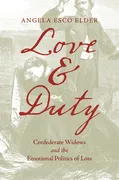


Love and Duty: Confederate Widows and the Emotional Politics of Loss
EGP3,603.00
Love and Duty: Confederate Widows and the Emotional Politics of Loss
Love and Duty: Confederate Widows and the Emotional Politics of Loss Book Description
Readers will discover a vivid portrait of the Southern home front during the Civil War. Between 1861 and 1865, about 200,000 women lost their husbands to battle. These widows left behind diaries, letters, scrapbooks, and pension files that reveal intimate details of love, loss, and survival. Angela Esco Elder weaves these sources together with songs, literary excerpts, and mourning gowns. The result is a compelling narrative that explores how white Confederate widows navigated their complex ties to a collapsing nation.
Meanwhile, Elder shows that widowhood granted many women unexpected cultural capital. This new status allowed them to influence local politics and shape public memory. Confederate leaders promoted an ideal of the self‑sacrificing widow who transferred her devotion from a dead spouse to the eternal cause. However, the reality proved far more nuanced. Throughout the book, these women use their newfound influence in clever and varied ways.
Furthermore, the story highlights how mourning became a political act. The widows turned grief into a platform to support or question the legitimacy of the Confederate state. Some embraced the official image, while others reshaped it to serve personal or community goals. Death forced every widow to rebuild her life, but only a few chose to help reconstruct the nation itself.
Key Features of Love and Duty: Confederate Widows and the Emotional Politics of Loss
This book offers rich primary‑source material presented in an accessible style. Readers can explore authentic letters, heartfelt diaries, and vivid descriptions of mourning attire. Additionally, Elder provides clear analysis that connects personal stories to broader political themes. Moreover, the narrative is organized chronologically, making it easy to follow each widow’s journey from courtship to loss and beyond. The work also includes thoughtful commentary on how gender and power intersected in the post‑war South.
Fans of social history will enjoy the blend of micro‑history and cultural analysis. The author’s engaging prose invites both scholars and general readers to uncover hidden aspects of Civil War memory. Because the book balances scholarly insight with readable storytelling, it serves as an excellent classroom resource and a rewarding solo read.
Why Read This Book?
Readers will gain a deeper understanding of how personal grief can shape public politics. The book reveals the surprising agency of women who were often dismissed as passive mourners. Consequently, it challenges traditional narratives about the Civil War’s aftermath. Also, the vivid anecdotes make the era feel immediate and alive. Whether you are interested in gender studies, American history, or emotional culture, this title provides fresh perspectives that enrich any bookshelf.
Moreover, the book’s elegant synthesis of documents and analysis helps you explore the emotional landscape of a tumultuous period. It encourages you to think about how loss and memory influence nation‑building. Therefore, purchasing this book adds a unique voice to your collection of historical literature.
About This Book
More detail about this book and the author can be found on Goodreads. Also, discover the best English books online in our store through this link.
Be the first to review “Love and Duty: Confederate Widows and the Emotional Politics of Loss”
Product Related

EGP1,050.00

Out of stock

Out of stock
EGP360.00

EGP215.00
Reviews
There are no reviews yet.