

Military Diasporas: Building of Empire in the Middle East and Europe (550 Bce-1500 ce)
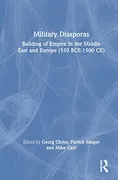


Military Diasporas: Building of Empire in the Middle East and Europe (550 Bce-1500 ce)
EGP14,744.00
Military Diasporas: Building of Empire in the Middle East and Europe (550 Bce-1500 ce)
Military Diasporas: Building of Empire in the Middle East and Europe (550 Bce-1500 ce) Book Description
Readers will discover a fresh look at how foreign soldiers shaped empires across two continents. This engaging English volume, available at Kalimat Bookstore Online, examines para‑ethnic military groups that acted as both warriors and administrators. Meanwhile, the author shows how these diasporic forces linked distant lands, policed territories, and projected cosmopolitan ambitions at courts and on campaigns. Consequently, the book offers a compelling narrative that blends political intrigue with military strategy from antiquity to the late Middle Ages.
Throughout the study, case studies illuminate the diversity of these forces. Inside the Achaemenid Empire, Ptolemaic Egypt, and the Roman Empire, foreign troops formed cohesive yet imagined communities. Additionally, chapters explore the Sassanid and Islamic occupations of Egypt, the Byzantine frontiers, and the Catalan Company in the Latin Aegean. Moreover, the text surveys Iberian nobles in North African courts, Mamluk and Italian stradiots, Hungarian border troops, the Teutonic Order, the Sword Brethren, and the Swiss cantonal armies. Therefore, readers gain a panoramic view of military diaspora from Persia through the Baltic.
Key Features of Military Diasporas: Building of Empire in the Middle East and Europe (550 Bce-1500 ce)
The book presents a novel research framework that treats foreign soldiers as composite, partly imagined groups. Fans of military history will appreciate the clear categorization of these para‑ethnic formations and their dual role in combat and governance. Furthermore, each chapter combines archaeological evidence, diplomatic records, and literary sources, allowing scholars to cross‑verify claims. Also, the narrative balances scholarly depth with accessible language, making it suitable for upper‑level undergraduates and postgraduate students alike.
Another strength lies in its broad chronological span. From 550 BCE to 1500 CE, the author traces how military diasporas contributed to empire‑building across shifting political landscapes. Additionally, the book highlights transimperial connections that reveal how ideas, tactics, and identities traveled alongside armies. Consequently, readers can explore how these mobile forces influenced cultural exchange, legal systems, and economic networks across the Middle East and Europe.
Why Read This Book?
Many readers seek a resource that connects military history with social and cultural analysis. This volume delivers precisely that by showing how soldiers acted as agents of change beyond the battlefield. Moreover, the diverse case studies provide comparative insights that help students identify patterns and exceptions in empire formation. Because the text is richly illustrated with maps and primary‑source excerpts, learners can visualize movements and understand context without additional materials.
Furthermore, the book serves as a bridge between specialized scholarship and classroom teaching. Professors can assign individual chapters to illustrate themes such as loyalty, identity, and governance. Meanwhile, independent scholars will find a valuable reference for research projects on diaspora, migration, and transnational networks. Ultimately, the work invites readers to rethink traditional narratives of war by foregrounding the people who moved, fought, and administered far from their homelands.
About This Book
More detail about this book and its author can be found on Goodreads. Also, discover the best English books online in our store through this Kalimat Bookstore link.
Be the first to review “Military Diasporas: Building of Empire in the Middle East and Europe (550 Bce-1500 ce)”
Product Related

EGP1,050.00

Out of stock

Out of stock
EGP360.00

EGP215.00
Reviews
There are no reviews yet.