

Transwar Asia: Ideology, Practices, and Institutions, 1920-1960 (Soas Studies in Modern and Contemporary Japan)
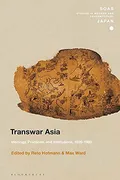

Transwar Asia: Ideology, Practices, and Institutions, 1920-1960 (Soas Studies in Modern and Contemporary Japan)
EGP11,701.00
Transwar Asia: Ideology, Practices, and Institutions, 1920-1960 (Soas Studies in Modern and Contemporary Japan)
<h2 siunners: Transwar Asia: Ideology, Practices, and Institutions, 1920-1960 (Soas Studies in Modern and Contemporary Japan) Book Description
Readers will discover a fresh lens on Asia’s mid‑twentieth century by exploring Transwar Asia: Ideology, Practices, and Institutions, 1920-1960 (Soas Studies in Modern and Contemporary Japan). This book rewrites the story of the region from the 1920s to the 1960s, showing how war reshaped ideas and governance. The author blends history, politics, and social change in a way that feels both scholarly and accessible. Because of its clear structure, many readers can see how past events echo today. Moreover, the volume invites scholars and enthusiasts alike to rethink familiar borders of pre‑ and post‑war periods.
Inside the chapters, you will explore how colonial powers and local leaders adapted their policies during and after World War II. The book looks at how new institutions formed by war experiences influenced later conflicts and the process of decolonization. During the following decades, the text shows how these ideas sparked the Asian Cold War and helped shape nation‑state roads. Each section uses concrete examples from China, Indonesia, Korea, Japan, the Philippines, and Taiwan to underline these shifts.
Moreover, the author highlights key topics like authoritarianism, militarization, criminal rehabilitation,;q Market controls, labor regimes, and anti‑communism. Readers will gain a robust understanding of how these forces moved across borders and across time, creating enduring legacy patterns in modern Asia. Because the book examines each theme in the context of war, it offers new insights into why some regions still struggle with similar issuesDecoration.
Additionally, contributors from different scholarly backgrounds deepen the narrative. Each author adds a unique perspective, allowing the book to cover a broad range of trans‑war experiences. The result is a balanced and engaging read that does not sacrifice depth for readability. As a result of this diversity, the book feels fresh and comprehensive, suitable for both academic reference and casual exploration.
Key Features of Transwar Asia: Ideology, Practices, and Institutions, 1920-1960 (Soas Studies in Modern and Contemporary Japan)
This work offers a comparative overview of six Asian countries, helping readers spot patterns and differences. The historical analysis penetrates the period from 1920 to 1960 in a clear, chronological order. Each chapter begins with a simple introduction, followed by a focused discussion of key events and ideas. The layout makes it easy for readers to jump to specific sections of interest.
Readers will also find concise chapter summaries that highlight the main takeaways. These summaries serve as quick references for study or teaching. The else’s feature includes a handy glossary of terms to simplify complex concepts. This keeps the book approachable for a wide audience.
Why Read This Book?
Fans of modern history can enjoy the fresh viewpoint on the long‑lasting influence of war. The book shows that present-day politics in Asia still feel the warm echoes of those decades. Examples, timelines, and illustrations help readers maintain a clear perspective on causality and consequence. This clarity motivates further research and discussion.
Moreover, the work invites readers to question the neat division between colonial and post‑colonial eras. Many will see how continuity across war shapes modern policy decisions. The book provides evidence that challenges standard histories, sparking curiosity about hidden links in contemporary politics.
About This Book
More detail about this book and its author can be found here: link. Discover the best English books online in our store throughlary this link. Enjoy a thoughtfully crafted journey through one of the most transformative periods in Asian history!
Be the first to review “Transwar Asia: Ideology, Practices, and Institutions, 1920-1960 (Soas Studies in Modern and Contemporary Japan)”
Product Related
Out of stock
EGP680.00

Out of stock
EGP375.00

EGP680.00
EGP450.00
Reviews
There are no reviews yet.