

Contesting Antiquity in Egypt: Archaeologies, Museums, and t

Contesting Antiquity in Egypt: Archaeologies, Museums, and t
EGP600.00
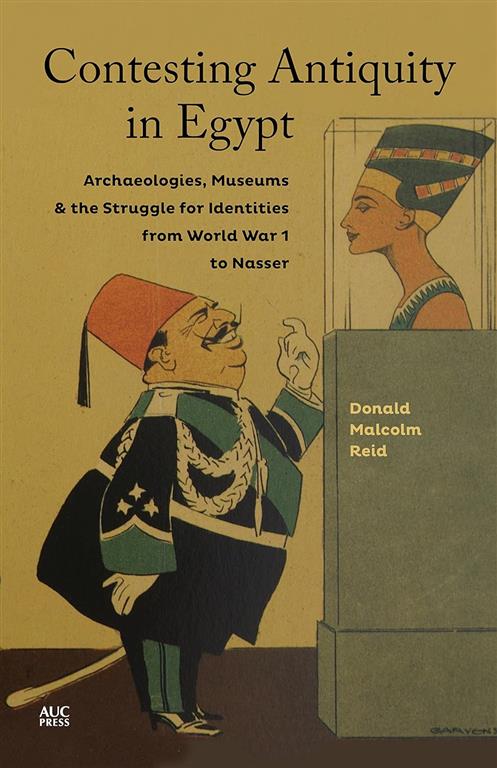
The history of the struggles for control over Egypt’s antiquities, and their repercussions, during a period of intense national ferment
The sensational discovery in 1922 of Tutankhamun’s tomb, close on the heels of Britain’s declaration of Egyptian independence, accelerated the growth in Egypt of both Egyptology as a formal discipline and of ‘pharaonism’—popular interest in ancient Egypt—as an inspiration in the struggle for full independence. Emphasizing the three decades from 1922 until Nasser’s revolution in 1952, this compelling follow-up to Whose Pharaohs? looks at the ways in which Egypt developed its own archaeologies—Islamic, Coptic, and Greco-Roman, as well as the more dominant ancient Egyptian. Each of these four archaeologies had given birth to, and grown up around, a major antiquities museum in Egypt. Later, Cairo, Alexandria, and Ain Shams universities joined in shaping these fields. Contesting Antiquity in Egypt brings all four disciplines, as well as the closely related history of tourism, together in a single engaging framework.
Throughout this semi-colonial era, the British fought a prolonged rearguard action to retain control of the country while the French continued to dominate the Antiquities Service, as they had since 1858. Traditional accounts highlight the role of European and American archaeologists in discovering and interpreting Egypt’s long past. Donald Reid redresses the balance by also paying close attention to the lives and careers of often-neglected Egyptian specialists. He draws attention not only to the contests between westerners and Egyptians over the control of antiquities, but also to passionate debates among Egyptians themselves over pharaonism in relation to Islam and Arabism during a critical period of nascent nationalism.
Drawing on rich archival and published sources, extensive interviews, and material objects ranging from statues and murals to photographs and postage stamps, this comprehensive study by one of the leading scholars in the field will make fascinating reading for scholars and students of Middle East history, archaeology, politics, and museum and heritage studies, as well as for the interested lay reader.
Out of stock
Contesting Antiquity in Egypt: Archaeologies, Museums, and t
Contesting Antiquity in Egypt: Archaeologies, Museums, and t Book Description
Contesting Antiquity in Egypt: Archaeologies, Museums, and t offers a vivid look at the fight over Egypt’s ancient treasures during the turbulent years between 1922 and 1952. Readers will discover how the 1922 uncovering of Tutankhamun’s tomb sparked a surge in Egyptology and a wave of “pharaonism” that fed the push for full independence. Meanwhile, the book shows how Egypt built its own archaeological traditions—Islamic, Coptic, Greco‑Roman, and ancient Egyptian—each linked to a major museum.
The story follows the British attempts to keep control while the French continued to dominate the Antiquities Service. Additionally, the narrative tracks how Cairo, Alexandria, and Ain Shams universities helped shape these fields. Furthermore, the author ties the rise of tourism to the growing national pride in Egypt’s past.
Key Features of Contesting Antiquity in Egypt: Archaeologies, Museums, and t
Traditional histories focus on European and American explorers. This book, however, brings Egyptian specialists to the forefront. Donald Reid highlights their careers, showing how local experts negotiated the contested ownership of artifacts. Moreover, the text reveals heated debates among Egyptians about pharaonism, Islam, and Arabism during a crucial nationalist era.
Readers will enjoy rich archival material, vivid photographs, and even postage stamps that illustrate the cultural clash. The study also includes interviews with museum curators and descendants of early archaeologists. Because of this mix of sources, the book feels both scholarly and accessible.
Each chapter combines political history with museum studies, offering a balanced view of how archaeology, heritage, and tourism intersected. Additionally, the narrative explains how museum collections became symbols of modern Egyptian identity.
Why Read This Book?
Fans of Middle Eastern history will find a fresh perspective on the fight for cultural control. The book helps students understand how archaeology can be a tool of both oppression and empowerment. Moreover, it serves as a guide for anyone interested in heritage management or museum practice. Readers will learn why ancient objects mattered to both colonizers and Egyptians seeking a new future.
Many readers appreciate the clear, engaging style that avoids academic jargon. The author’s use of short sentences and active voice makes complex events easy to follow. Therefore, the book works well for scholars, museum professionals, and curious laypeople alike.
About This Book
More detail about this book and its author can be found on Goodreads. Also discover the best English books online in our store through this link.
| Author |
|---|
Only logged in customers who have purchased this product may leave a review.
Product Related

Out of stock
EGP755.00
Out of stock
EGP1,485.00

EGP589.00

Out of stock
EGP445.00
Reviews
There are no reviews yet.