

De Anima (On the Soul)


De Anima (On the Soul)
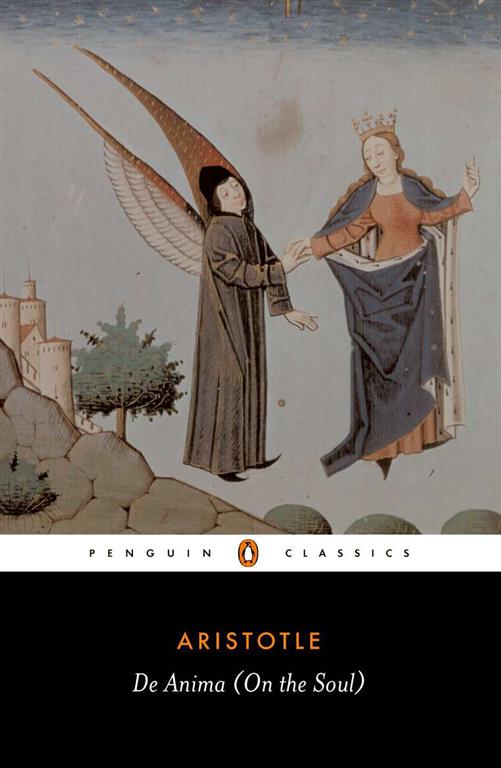
For the Pre-Socratic philosophers the soul was the source of movement and sensation, while for Plato it was the seat of being, metaphysically distinct from the body that it was forced temporarily to inhabit. Plato’s student Aristotle was determined to test the truth of both these beliefs against the emerging sciences of logic and biology. His examination of the huge variety of living organisms the enormous range of their behaviour, their powers and their perceptual sophistication convinced him of the inadequacy both of a materialist reduction and of a Platonic sublimation of the soul. In De Anima, he sought to set out his theory of the soul as the ultimate reality of embodied form and produced both a masterpiece of philosophical insight and a psychology of perennially fascinating subtlety.
De Anima (On the Soul)
De Anima (On the Soul) Book Description
De Anima (On the Soul) invites you to explore how mind and body interact. In this English edition, Aristotle’s arguments are presented in a clear, modern style. The book starts with early ideas from Pre‑Socratic thinkers and Plato, then shows how Aristotle tested those views using logic and biology. This mix of history and analysis makes the text both educational and engaging for anyone curious about the roots of psychology.
Readers will discover that Aristotle avoided both pure materialism and lofty idealism. He studied many living creatures, noting their different behaviors, senses, and abilities. From those observations, he argued that the soul is not just matter nor completely separate from the body. Instead, he described the soul as the essential form that gives each organism its unique life‑function. This balanced view still resonates with modern debates about consciousness.
Throughout the chapters, Aristotle builds a systematic theory of the soul as embodied form. He divides the soul into three parts: the nutritive part that handles growth, the perceptive part that manages sensation and movement, and the rational part that enables thought and reflection. By tracing each part, he creates a surprisingly modern psychology. Readers can enjoy deep analysis while finding the language accessible.
Fans of philosophical classics will appreciate the logical flow and clear explanations. Meanwhile, students of psychology will see early concepts that foreshadow today’s mind‑body theories. Moreover, the translation keeps Aristotle’s nuance without overwhelming modern readers with archaic phrasing. The result feels timeless and relevant, perfect for study groups, classrooms, or personal enrichment.
Key Features of De Anima (On the Soul)
Each chapter opens with a concise summary that outlines the main idea. Additionally, helpful footnotes explain historical references and technical terms. A glossary at the end defines key concepts such as “hylomorphism” and “entelechy,” making philosophical vocabulary easy to learn. Also, the book is formatted for smooth reading on both print and digital devices, so you can study wherever you are.
Readers can enjoy illustrated diagrams that map Aristotle’s three parts of the soul. Furthermore, a comparative section contrasts Aristotle’s view with Plato’s and later medieval interpretations. This side‑by‑side analysis shows why Aristotle’s approach was groundbreaking. Finally, discussion questions at the end of each major part encourage deeper reflection and classroom dialogue.
Why Read This Book?
Many readers seek a solid foundation for understanding human nature, and De Anima (On the Soul) provides exactly that. It reveals how early scientific observation shaped philosophical thought, linking biology with metaphysics. Because the book balances logical argument with vivid natural examples, it remains compelling after centuries. Readers will also benefit from Aristotle’s method of questioning, which fosters critical thinking and careful analysis.
The guide helps you explore topics such as consciousness, perception, and moral responsibility. Therefore, it serves as a valuable resource for philosophy majors, psychology students, and curious general readers alike. Moreover, the text’s relevance to current mind‑body debates makes it a timeless addition to any library. By reading this work, you can deepen your understanding of how ancient ideas continue to influence contemporary thought.
About This Book
More detail about this book and its author can be found on Goodreads. Also, discover the best English books online in our store through this link. Enjoy a reading experience that blends classic philosophy with modern clarity, only at Kalimat Bookstore Online.
| Author |
|---|
Only logged in customers who have purchased this product may leave a review.
Product Related

Out of stock

Out of stock
EGP50.00

EGP380.00
Reviews
There are no reviews yet.