

Descendants of a Lesser God: Regional Power in Old and Middle


Descendants of a Lesser God: Regional Power in Old and Middle
EGP1,350.00
A new perspective on the dynamics of dynastic rule in the southernmost province of Egypt, from the Old Kingdom to the New Kingdom
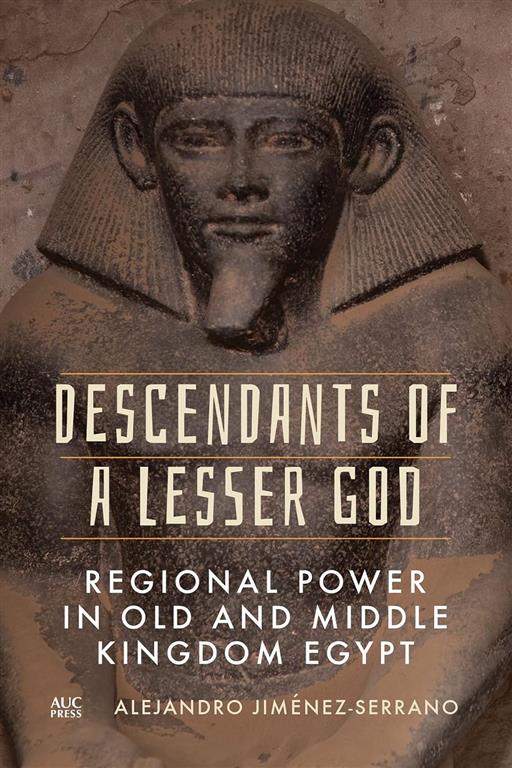
The First Upper Egyptian nome, with its capital, Elephantine, was important in ancient times, as it stood on the southern border between Egypt and the Nubian provinces above the First Cataract. Since 2008, Alejandro Jiménez-Serrano has led an archaeological mission at the necropolis of Qubbet el-Hawa, where Elephantine’s high officials are buried. In Descendants of a Lesser God, he draws on textual records and archaeological data, together with new evidence from his work at the tombs, to cast fresh historiographical light on the dynastic dynamics of these ruling elites.
Jiménez-Serrano analyzes the origin of the local elites of Elephantine, and their role in trade and international relations with Nubia and neighboring regions, from the end of the Old Kingdom to the end of the Middle Kingdom. He explores the development of these power groups, organized as they were in complex households, which in many ways emulated the functioning of the royal court. Delving deeply into the funerary world, he also highlights the relationship between social memory and political legitimacy through his examination of the mortuary cult of a late Old Kingdom governor of Elephantine, Heqaib, who was transformed into a local divinity and later claimed as the mythic ancestor of the ruling family of Elephantine.
The history of ancient Egypt has traditionally been written from a court perspective. This new history of a strategically important region not only modifies existing perceptions of provincial life in the Middle Kingdom among the elites, but also introduces new evidence to support more complex and detailed reconstructions of the dynastic families in power.
34 in stock
Descendants of a Lesser God: Regional Power in Old and Middle
Descendants of a Lesser God: Regional Power in Old and Middle Book Description
Readers will discover a fresh look at dynastic rule in Egypt’s southernmost province, covering the Old Kingdom through the Middle Kingdom. This engaging English work, available at Kalimat Bookstore Online, invites you into the world of Elephantine, the capital of the First Upper Egyptian nome, which guarded the border with Nubia above the First Cataract.
Meanwhile, Alejandro Jiménez‑Serrano has led an archaeological mission at Qubbet el‑Hawa since 2008. He uncovers tombs of high officials and brings new evidence to light. The author blends textual records with fresh finds, helping readers understand how local elites shaped trade, diplomacy, and power from the end of the Old Kingdom to the close of the Middle Kingdom.
Furthermore, the book explores how these elite households functioned like miniature royal courts. Their complex organization mirrored the central government, offering a unique perspective on provincial authority. This approach makes the history feel both intimate and grand.
Additionally, the author examines the mortuary cult of Heqaib, a late Old Kingdom governor who became a local divinity. By tracing Heqaib’s transformation, readers learn how social memory reinforced political legitimacy. The story shows why provincial narratives matter alongside traditional court histories.
Key Features of Descendants of a Lesser God: Regional Power in Old and Middle
Fans of ancient history will enjoy the blend of archaeology and narrative. The book provides clear explanations of complex social structures, making scholarly insights accessible to a general audience. Each chapter includes vivid descriptions of tombs, artifacts, and daily life, allowing readers to visualize Elephantine’s bustling trade routes.
Readers can also benefit from the author’s firsthand experience in the field. Jiménez‑Serrano’s work at Qubbet el‑Hawa adds authenticity and excitement, turning dry data into a lively adventure. Moreover, the book presents new evidence that challenges older assumptions about provincial power.
Throughout the text, transition words guide you smoothly from one idea to the next. This careful pacing ensures a comfortable reading flow, while the active voice keeps the narrative dynamic and engaging.
Why Read This Book?
Many readers seek a deeper understanding of Egypt beyond pharaohs and pyramids. This book delivers that by focusing on the regional elites who shaped history from the sidelines. It reveals how trade with Nubia and neighboring lands influenced Egyptian politics, offering a broader view of ancient connections.
The story highlights the human side of power—family ties, household rituals, and personal ambitions. Consequently, you will feel a stronger connection to the individuals who lived centuries ago. The author’s clear language and concise sentences make complex topics easy to grasp.
Because the book balances scholarly research with readable prose, it serves both students and casual history lovers. It also provides a solid foundation for further study of Egyptian provincial life, making it a valuable addition to any personal library.
About This Book
For more detail about the author and reviews, check this Goodreads link. Explore additional English titles in our store through this English Books collection.
| Author |
|---|
Only logged in customers who have purchased this product may leave a review.
Product Related

Out of stock
EGP550.00

EGP755.00

Out of stock
EGP330.00
EGP2,605.00
Reviews
There are no reviews yet.