

Ecce Homo: How One Becomes What One is
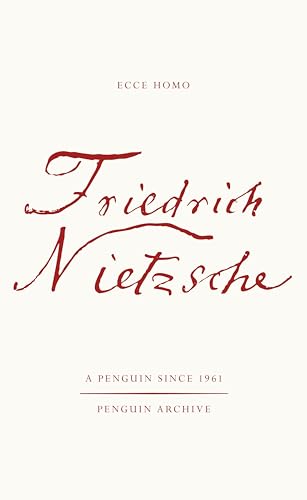


Ecce Homo: How One Becomes What One is
EGP400.00
Ecce Homo: How One Becomes What One Is – Book Summary
Ecce Homo: How One Becomes What One Is is one of Friedrich Nietzsche’s most personal and provocative philosophical works. In this book, Nietzsche reflects on his own life, his writings, and his intellectual development. As a result, the text feels both autobiographical and philosophical at the same time.
A Philosopher Reflecting on Himself
Unlike traditional philosophy books that focus only on ideas, Ecce Homo turns inward. Nietzsche examines his own journey and asks how he became the thinker he is. For example, he discusses his major works such as Thus Spoke Zarathustra and Beyond Good and Evil.
Moreover, he explains the motivations behind his writing style and philosophical positions. Therefore, readers gain insight not only into his ideas but also into his personality and creative process.
Language: English
ISBN-10: 9780241752227
ISBN-13: 9780241752227
Genre: Philosophy
Condition: New
More detail about this book and author can check this link also Discover the Best English Books Online in our store through this link
10 in stock
Ecce Homo: How One Becomes What One Is – Book Summary
Ecce Homo: How One Becomes What One Is is one of Friedrich Nietzsche’s most personal and provocative philosophical works. In this book, Nietzsche reflects on his own life, his writings, and his intellectual development. As a result, the text feels both autobiographical and philosophical at the same time.
A Philosopher Reflecting on Himself
Unlike traditional philosophy books that focus only on ideas, Ecce Homo turns inward. Nietzsche examines his own journey and asks how he became the thinker he is. For example, he discusses his major works such as Thus Spoke Zarathustra and Beyond Good and Evil.
Moreover, he explains the motivations behind his writing style and philosophical positions. Therefore, readers gain insight not only into his ideas but also into his personality and creative process.
Themes of Identity and Self-Understanding
One of the central themes of Ecce Homo: How One Becomes What One Is is identity. Nietzsche explores how a person develops through struggle, experience, and self-overcoming. In addition, he emphasizes the importance of self-awareness and honesty.
Another key theme is individuality. Nietzsche strongly criticizes conformity and encourages people to define their own values. Meanwhile, he argues that greatness comes from embracing one’s true nature, even if it goes against society.
A Bold and Controversial Work
This book is also known for its bold and sometimes controversial tone. Nietzsche does not hesitate to praise his own work or challenge traditional moral ideas. However, this self-confident style is part of his philosophical message.
As a result, Ecce Homo is often seen as both a philosophical text and a psychological exploration. It invites readers to think deeply about what it means to become fully oneself.
Why Readers Still Study It
Despite being written in the 19th century, Ecce Homo: How One Becomes What One Is remains influential today. For example, modern discussions about identity, authenticity, and personal growth often connect back to Nietzsche’s ideas.
In addition, the book offers a unique perspective on philosophy as a lived experience rather than just theory. Therefore, it continues to attract readers interested in psychology, philosophy, and self-development.
A Deeply Personal Philosophical Work
Finally, Ecce Homo stands out as one of Nietzsche’s most unusual books. It combines autobiography, philosophy, and self-analysis in a powerful way. Moreover, it challenges readers to reflect on their own path and question how they become who they are.
For anyone interested in deep philosophical reflection and the nature of identity, this book remains an essential and thought-provoking read.
Language: English
ISBN-10: 9780241752227
ISBN-13: 9780241752227
Genre: Philosophy
Condition: New
More detail about this book and author can check this link also Discover the Best English Books Online in our store through this link
Product Related
Out of stock
EGP520.00

EGP199.00

Out of stock
EGP200.00