

Edward Said:The Politics of an Oppositional Intellectual
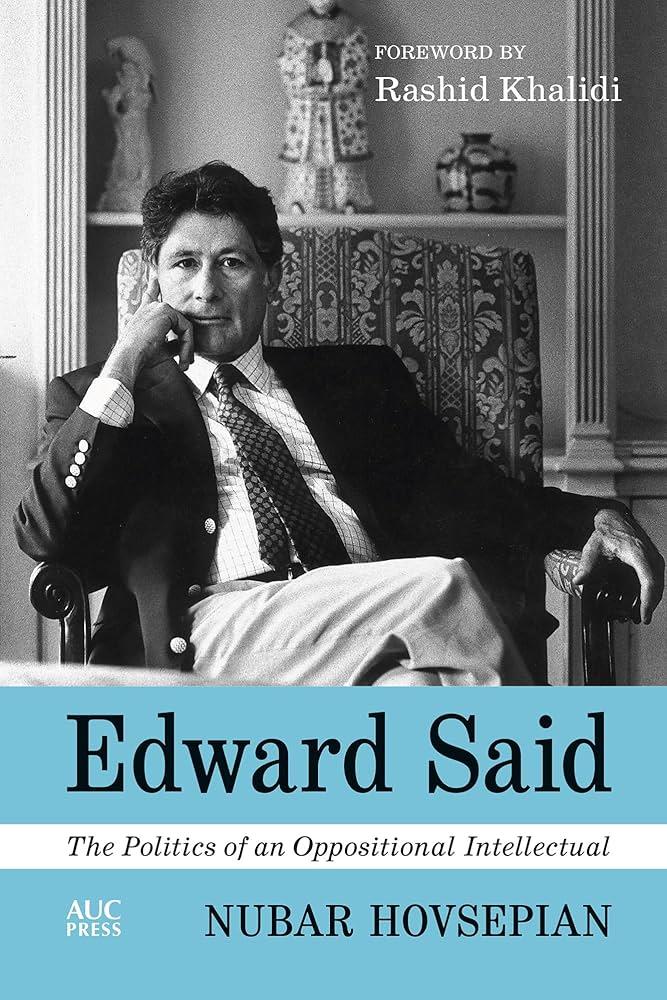
Edward Said:The Politics of an Oppositional Intellectual
EGP750.00
A learned and intimate exploration of Said’s thought with deep relevance for today’s debates about Palestine and Israel and American intellectual life.”—Peter Beinart, author of Being Jewish After the Destruction of Gaza
An exploration of the political thought of one of the twentieth century’s most influential thinkers and the foremost advocate for the Palestinian cause in the West
Edward Said was one of the most influential intellectuals of the twentieth century. A literary scholar with an aesthete’s temperament, he did not experience his political awakening until the 1967 Arab–Israeli war, which transformed his thinking and led him to forge ties with political groups and like-minded scholars. Said’s subsequent writings, which cast light on the interplay between cultural representation and the exercise of Western political power, caused a seismic shift in scholarly circles and beyond. In this intimate intellectual biography, by a close friend and confidant, Nubar Hovsepian offers fascinating insight into the evolution of Said’s political thought.
Through analysis of Said’s seminal works and the debates surrounding them, Edward Said: The Politics of an Oppositional Intellectual traces the influence of Foucault on Said, and how Said eventually diverged from this influence to arrive at a more pronounced understanding of agency, resistance, and liberation. He consequently affiliated more closely with Raymond Williams, Antonio Gramsci, and more contemporaneously, with his friends the late Eqbal Ahmad and Ibrahim Abu-Lughod.
Said held that it is the intellectual’s responsibility to expose lies and deceptions of the holders of power. A passionate advocate for the Palestinian cause, his solidarity did not prevent him from launching a sustained critique of the Palestinian leadership. Hovsepian charts both Said’s engagement with the Palestinian national movement and his exchanges with a host of intellectuals over Palestine, arguing that Said’s interventions have succeeded in changing the parameters of the discourse in the humanities, and among younger Jews searching for political affiliation.
Drawing on his diaries, in which he recorded his meetings with Said, as well as access to some of Said’s private letters, Hovsepian illuminates, in rich detail, the trajectory of Said’s political thinking and the depth and breadth of his engagement with peers and critics over issues that continue to resonate to this day.
34 in stock
Edward Said: The Politics of an Oppositional Intellectual
Edward Said: The Politics of an Oppositional Intellectual Book Description
Edward Said: The Politics of an Oppositional Intellectual offers a clear, intimate portrait of one of the twentieth century’s most influential thinkers. Readers will enjoy a vivid look at Said’s lifelong advocacy for the Palestinian cause and his impact on cultural studies. Peter Beinart calls the work “a learned and intimate exploration of Said’s thought with deep relevance for today’s debates about Palestine, Israel, and American intellectual life.” The author, Nubar Hovsepian, was a close friend of Said, and his insider perspective adds depth and authenticity to the biography.
The story begins with Said’s early career as a literary scholar. Meanwhile, the 1967 Arab–Israeli war sparked his political awakening and set him on a path of activism. His writings soon exposed the ties between cultural representation and Western power, shaking academic circles worldwide. Throughout the narrative, Hovsepian shows how Said’s ideas grew from literary criticism to a powerful theory of resistance and liberation.
Key Features of Edward Said: The Politics of an Oppositional Intellectual
Hovsepian examines Said’s major works and the fierce debates they generated. Furthermore, the book traces the influence of Michel Foucault on Said’s early ideas and shows how he later forged a distinct theory of agency. Readers will also learn about his connections with Raymond Williams, Antonio Gramsci, and friends such as Eqbal Ahmad and Ibrahim Abu‑Lughod.
Drawing on Said’s diaries and private letters, the biography reveals his deep engagement with the Palestinian national movement. Additionally, it highlights his willingness to critique Palestinian leadership, demonstrating a commitment to truth over partisanship. Therefore, the work offers both historical context and lasting relevance for contemporary debates.
Why Read This Book?
Readers can discover how an intellectual’s responsibility extends to exposing lies and deceptions of those in power. Moreover, the book provides a rare glimpse into Said’s personal relationships, offering a richer understanding of his ideas. Fans of political theory, cultural studies, or Middle‑East history will appreciate the accessible style and vivid anecdotes.
The biography also helps students grasp complex concepts such as orientalism, representation, and resistance without dense academic jargon. Because the author was a confidant, the narrative feels authentic and intimate, allowing readers to experience Said’s intellectual journey as if they were present in his study.
About This Book
More detail about this book and its author can be found on Goodreads. Also, explore the best English books online in our store through Kalimat Bookstore.
| Author |
|---|
Only logged in customers who have purchased this product may leave a review.
Product Related

EGP2,280.00

Out of stock

Out of stock
EGP110.00

EGP200.00
Reviews
There are no reviews yet.