

Empire and Constitution in Modern Japan: Why Could war With China not be Prevented? (Soas Studies in Modern and Contemporary Japan)
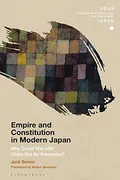

Empire and Constitution in Modern Japan: Why Could war With China not be Prevented? (Soas Studies in Modern and Contemporary Japan)
EGP4,502.00
Empire and Constitution in Modern Japan: Why Could war With China not be Prevented? (Soas Studies in Modern and Contemporary Japan)
Empire and Constitution in Modern Japan: Why Could war With China not be Prevented? Book Description
Readers will discover a vivid picture of Japan’s rise from the Meiji era to the brink of World War II in Empire and Constitution in Modern Japan: Why Could war With China not be Prevented? This English‑language work, available at Kalimat Bookstore Online, blends political analysis with engaging storytelling. Throughout the book, Junji Banno shows how the twin forces of empire building and constitutional reform shaped Japan’s national agenda between 1868 and 1937.
The author explains that “empire” refers to Japan’s drive to establish its own overseas dominion, while “constitution” denotes the parallel effort to create a modern, rule‑of‑law government. Meanwhile, Banno reveals moments when these ideas clashed, as well as periods when they reinforced each other. Because of this complex relationship, readers can better understand why war with China erupted in 1937 and why the conflict quickly escalated toward Pearl Harbor.
Translated by renowned scholar Arthur Stockwin, the book offers an accessible yet scholarly account of pre‑war Japanese politics. Additionally, it provides a clear timeline of policy changes, diplomatic negotiations, and military actions that illuminate the era’s contradictions. Moreover, Banno’s narrative remains readable for both specialists and general history fans.
Key Features of Empire and Constitution in Modern Japan: Why Could war With China not be Prevented?
Inside each chapter, readers will find concise summaries, well‑chosen primary sources, and thoughtful commentary that illustrate how empire and constitutional ideas interacted. Furthermore, the book includes maps and charts that help visualize Japan’s territorial ambitions and internal reforms. Also, the translation captures the nuance of the original Japanese text while maintaining a smooth English flow.
Each section ends with discussion questions that encourage deeper reflection on the causes of the 1937 conflict. Because of these features, the book serves as a valuable resource for university courses, book clubs, and independent learners interested in East Asian history.
Why Read This Book?
Fans of modern history will enjoy the balanced approach that blends political theory with real‑world events. The author’s expertise allows readers to grasp why Japan’s leaders pursued both imperial expansion and constitutional modernization at the same time. Moreover, the book helps explain the broader consequences of these choices for regional stability.
Readers can apply the insights from this work to contemporary discussions about nationalism and governance. Additionally, the clear writing style ensures that complex ideas remain understandable without sacrificing depth. Therefore, anyone seeking to explore the roots of World War II in the Pacific will find this title indispensable.
About This Book
More detail about this book and its author can be found on Goodreads. Also, discover the best English books online in our store through this link. This title is a must‑have for scholars, students, and history enthusiasts alike.
Be the first to review “Empire and Constitution in Modern Japan: Why Could war With China not be Prevented? (Soas Studies in Modern and Contemporary Japan)”
Product Related

EGP1,050.00

Out of stock

Out of stock
EGP360.00

EGP215.00
Reviews
There are no reviews yet.