

How Europe Underdeveloped Africa
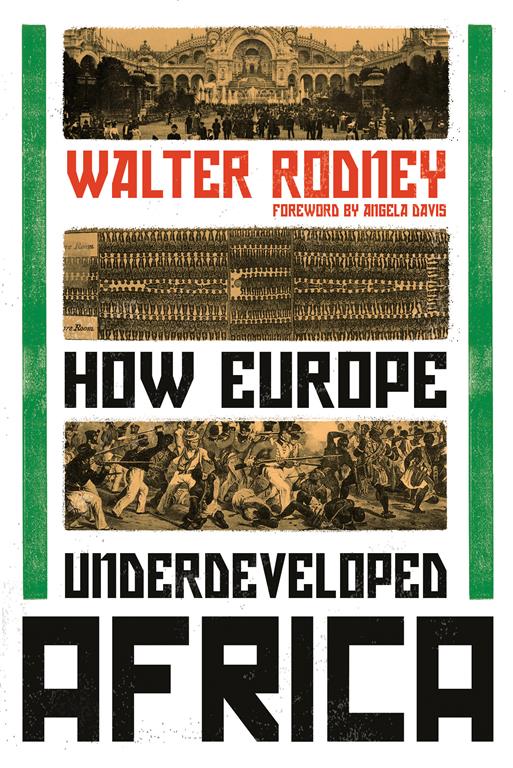


How Europe Underdeveloped Africa
EGP1,355.00
In his short life, the Guyanese intellectual Walter Rodney emerged as one of the leading thinkers and activists of the anticolonial revolution, leading movements in North America, South America, the African continent, and the Caribbean. In each locale, Rodney found himself a lightning rod for working class Black Power. His deportation catalyzed 20th century Jamaica’s most significant rebellion, the 1968 Rodney riots, and his scholarship trained a generation how to think politics at an international scale. In 1980, shortly after founding of the Working People’s Alliance in Guyana, the 38-year-old Rodney would be assassinated. In his magnum opus, How Europe Underdeveloped Africa, Rodney incisively argues that grasping “the great divergence” between the west and the rest can only be explained as the exploitation of the latter by the former. This meticulously researched analysis of the abiding repercussions of European colonialism on the continent of Africa has not only informed decades of scholarship and activism, it remains an indispensable study for grasping global inequality today.
Out of stock
How Europe Underdeveloped Africa
How Europe Underdeveloped Africa Book Description
How Europe Underdeveloped Africa is a powerful English volume available at Kalimat Bookstore Online. The book brings Walter Rodney’s sharp analysis to a modern audience, showing how centuries of European exploitation shaped the continent’s economic and social landscape. Readers will discover a clear, engaging narrative that connects historical events to present‑day inequality. Because the text is written in an accessible style, it appeals to students, activists, and anyone curious about global development. Moreover, the book’s relevance has only grown as debates about reparations and post‑colonial justice intensify.
In his short but impactful life, Guyanese scholar Walter Rodney emerged as a leading voice in the anticolonial movement. He traveled across North America, South America, Africa, and the Caribbean, inspiring Black Power activists and labor organizers. Meanwhile, Rodney’s deportation from Jamaica sparked the 1968 Rodney riots, a defining moment in Jamaican resistance. Additionally, his teaching helped a generation learn to think about politics beyond national borders, fostering a truly international perspective.
Rodney’s magnum opus argues that the “great divergence” between the West and the rest is not a natural outcome but a result of deliberate exploitation. He shows how European powers extracted wealth, distorted local economies, and imposed unequal trade terms that left Africa underdeveloped. Furthermore, the book explains how these historic injustices continue to affect contemporary African societies, from debt burdens to trade imbalances. Readers can therefore grasp why structural change remains essential for true development.
Key Features of How Europe Underdeveloped Africa
Each chapter combines rigorous research with vivid storytelling, making complex history easy to follow. The author uses clear examples, such as the slave trade, colonial resource extraction, and post‑war economic policies, to illustrate long‑term impacts. Additionally, the book includes maps, timelines, and quotations that bring the past to life. Because Rodney writes with both scholarly depth and passionate vision, the text feels both informative and inspiring. Moreover, the edition offers a new foreword that connects Rodney’s ideas to current debates on climate justice and global trade.
Readers will appreciate the book’s balance of theory and real‑world case studies. For instance, the analysis of cotton production in West Africa shows how European demand created dependency that still shapes export economies today. Also, the discussion of land dispossession in Southern Africa reveals patterns that echo in modern land reform struggles. These concrete examples help readers learn how historical forces shape present realities, encouraging critical reflection and informed activism.
Why Read This Book?
Fans of history, economics, and social justice will find this work indispensable. The book equips readers with the knowledge to critique modern development policies and to support fairer alternatives. Because Rodney’s arguments are grounded in extensive evidence, the book serves as a reliable resource for essays, research projects, and community discussions. Moreover, the engaging prose invites casual readers to explore deep topics without feeling overwhelmed. Therefore, anyone who wants to understand the roots of global inequality will benefit from reading How Europe Underdeveloped Africa.
About This Book
More detail about this book and its author can be found on Goodreads. Also, discover the best English books online in our store through this link. This edition is ready to ship from Kalimat Bookstore Online, offering a fast and reliable reading experience for all customers.
| Author |
|---|
Only logged in customers who have purchased this product may leave a review.
Product Related


Out of stock
EGP1,305.00

Out of stock
EGP455.00

EGP755.00
Reviews
There are no reviews yet.