

Expressionism

Expressionism
EGP1,160.00
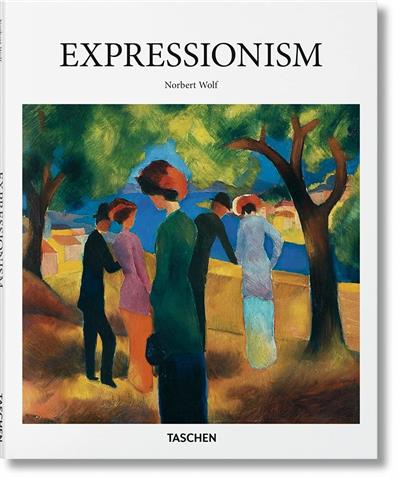
(2015) Sharp angles, strange forms, lurid colors, and distorted perspectives are classic hallmarks of Expressionism, the twentieth century movement that prioritized emotion over objective reality. Though particularly present in Germany and Austria, the movement’s approach flourished internationally and is today hailed as one of the most influential shifts in art history. With leading groups Die Brucke (The Bridge) and Der Blaue Reiter (The Blue Rider), and key players such as Wassily Kandinsky, Egon Schiele, and Emil Nolde, the Expressionists disowned Impressionism, which they regarded as “man lowered to the position of a gramophone record of the outer world”, to depict instead a raw and visceral experience of life as it was felt, rather than seen on the surface. Their paintings brim with emotive force, conveyed in particular through intense and non-naturalistic color palettes, loose brushwork, and thick textures. Covering the group’s stylistic tendencies, influences, and most important protagonists, this introductory book explores the Expressionist panorama of moods, ideas, and emotions and their abiding quest for deep authenticity.
1 in stock
Expressionism
Expressionism Book Description
Expressionism is an engaging English-language book now available at Kalimat Bookstore Online. Readers will discover a vivid overview of the twentieth‑century art movement that prized feeling over realistic depiction. This concise guide invites you to explore sharp angles, strange forms, lurid colors, and distorted perspectives that define Expressionist works.
Meanwhile, the book explains how the movement blossomed in Germany and Austria before spreading worldwide. It shows why Expressionism is considered one of the most influential shifts in art history. By the early 1900s, artists rejected Impressionism’s quiet observation and instead aimed to capture raw emotion.
Fans of art will meet the leading groups Die Brücke (The Bridge) and Der Blaue Reiter (The Blue Rider). Moreover, the text highlights key figures such as Wassily Kandinsky, Egon Schiele, and Emil Nolde. These creators dismissed Impressionism as a “gramophone record of the outer world.” Instead, they painted what they felt, using intense, non‑naturalistic colors, loose brushwork, and thick textures.
Throughout the chapters, the book explores each group’s stylistic tendencies and influences. Additionally, it introduces the most important protagonists and their quest for deep authenticity. Readers will enjoy a clear portrait of the Expressionist panorama of moods, ideas, and emotions.
Key Features of Expressionism
The guide presents a timeline that places major events and exhibitions in context. It also includes high‑resolution images of iconic paintings, allowing you to see the bold color palettes up close. Furthermore, sidebars summarize each artist’s philosophy in plain language.
Each chapter ends with discussion questions that encourage deeper reflection. Because the book is written for a general audience, technical jargon is kept to a minimum. Moreover, a glossary defines terms such as “chromatic distortion” and “figurative abstraction.”
Readers can compare Expressionism with related movements like Fauvism and Cubism. This comparative approach helps you understand why Expressionism remains a cornerstone of modern art education. Additionally, the book provides suggestions for further reading and museum visits.
Why Read This Book?
This book offers an accessible entry point for anyone curious about modern art. It helps you grasp how artists turned personal turmoil into powerful visual statements. Consequently, you will gain appreciation for works that might otherwise seem chaotic.
Fans of museum tours will find the book’s vivid descriptions useful for on‑site analysis. Moreover, teachers can assign it as supplemental reading for high‑school art classes. The concise layout fits comfortably in a backpack or tote, making it ideal for travel.
Finally, the book emphasizes the lasting impact of Expressionism on contemporary visual culture. By linking historic pieces to modern design, it shows why the movement still inspires creators today.
About This Book
Published in 2015, Expressionism serves as a reliable reference for students, educators, and art lovers alike. More detail about this book and its author can be found on Goodreads. Also, discover the best English books online in our store through this link.
| Author |
|---|
Only logged in customers who have purchased this product may leave a review.
Product Related

Out of stock
EGP245.00

Out of stock
EGP560.00

Out of stock
EGP325.00

Out of stock
EGP670.00
Reviews
There are no reviews yet.