

German Aircraft of World war i: 1914-1918 (Technical Guides)


German Aircraft of World war i: 1914-1918 (Technical Guides)
German Aircraft of World war i: 1914-1918 (Technical Guides) Book Description
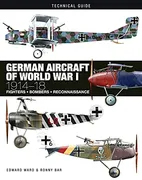
Readers will find a vivid picture of the German Air Force’s evolution from 1914 to 1918 in this highly illustrated guide. The book arranges every aircraft chronologically by type, making it easy to follow the rapid technological changes. Inside, you will see early models such as the Albatros B.1 and Fokker E.II, then progress to the iconic Fokker D.VII and the powerful Junkers CL.1. Because each entry includes authentic markings and detailed color schemes, the experience feels almost like a museum visit.
Fans of aviation history will enjoy the comprehensive survey that covers both famous and obscure types. Throughout the pages, monoplanes, biplanes, single‑seater fighters, two‑seater fighters, bombers, ground‑attack aircraft, night bombers, giant bombers, and floatplanes are all represented. Moreover, lesser‑known models such as the LVG and Pfalz fighters, the Gotha and Zeppelin‑Staaken large bombers, and AEG ground‑attack planes receive equal attention. This balanced approach helps readers appreciate the full scope of Germany’s wartime air power.
The guide also provides exhaustive specifications for every aircraft. Each profile lists engine type, speed, wingspan, and armament, allowing enthusiasts to compare performance at a glance. Additionally, clear diagrams and side‑view illustrations make technical data accessible even to newcomers. Therefore, whether you are a model builder, a history buff, or a student, you will quickly locate the facts you need.
Key Features of German Aircraft of World war i: 1914-1918 (Technical Guides)
Readers can explore over 70 aircraft types, each presented with high‑resolution photographs and faithful color renderings. Furthermore, the book organizes content by chronological development, which highlights how design choices responded to battlefield demands. Meanwhile, concise tables summarize specifications, helping you compare speed, climb rate, and payload without paging through dense text. Also included are short historical notes that explain each model’s role in major battles.
Another strength lies in the inclusion of rare and prototype aircraft that rarely appear in other publications. The author has consulted original war‑time documents to recreate authentic markings, giving the guide a scholarly yet readable tone. Because every illustration is labeled clearly, you can easily identify wing shapes, tail configurations, and cockpit layouts. This level of detail makes the book a valuable reference for both casual readers and serious researchers.
Why Read This Book?
Readers will discover a compelling mix of visual appeal and factual depth that few aviation books provide. The story of German aircraft development is told through engaging narratives that link each design to its tactical purpose. Moreover, the guide’s user‑friendly layout encourages quick browsing, so you can jump from the early scouting planes to the late‑war bombers without losing context. Fans of World War I history will appreciate how the book connects aircraft advances to broader military strategies.
Additionally, the book serves as an educational tool for classrooms and hobby clubs. Teachers can assign specific sections to illustrate engineering progress, while modelers can use the specifications to build accurate replicas. Also, the thorough bibliography and external link to Goodreads offer pathways for further research, ensuring that your curiosity is never limited by the pages.
About This Book
More detail about this book and its author can be found on Goodreads. Also, discover the best English books online in our store through this link. This guide promises an enjoyable reading experience, rich visuals, and reliable data, making it a must‑have addition to any World War I collection.
Be the first to review “German Aircraft of World war i: 1914-1918 (Technical Guides)”
Product Related

EGP1,050.00

Out of stock

Out of stock
EGP360.00

EGP215.00
Reviews
There are no reviews yet.