

A (Very) Short History of Life on Earth: 4.6 Billion Years i
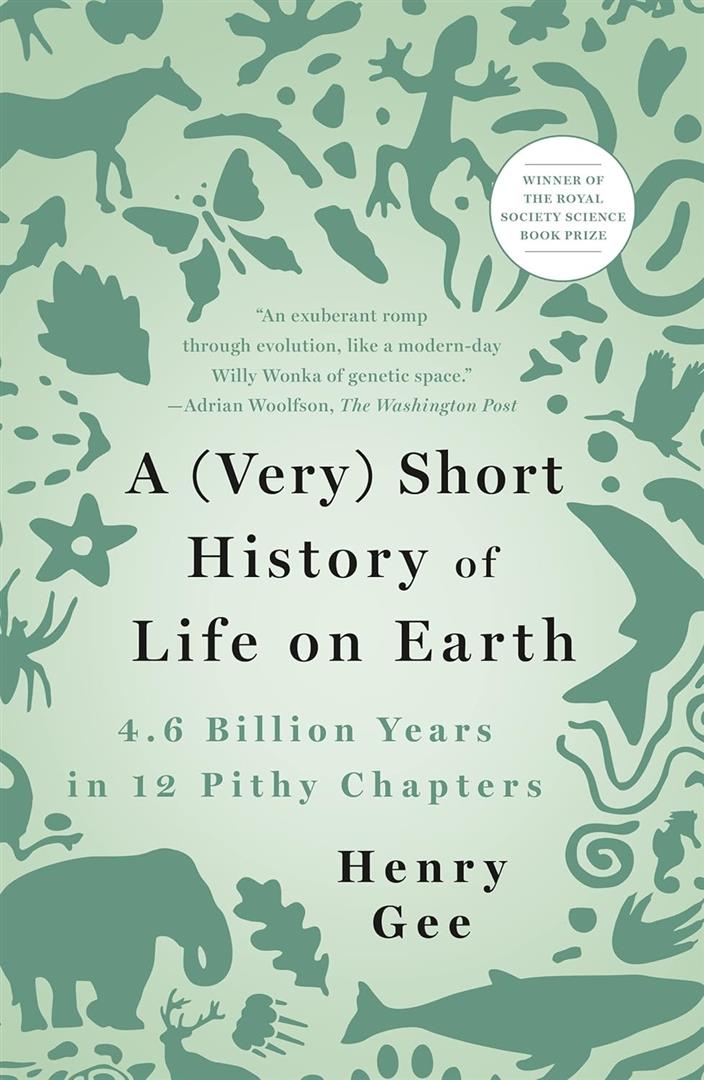

A (Very) Short History of Life on Earth: 4.6 Billion Years i
EGP1,240.00
The Royal Society’s Science Book of the Year
“[A]n exuberant romp through evolution, like a modern-day Willy Wonka of genetic space. Gee’s grand tour enthusiastically details the narrative underlying life’s erratic and often whimsical exploration of biological form and function.” ―Adrian Woolfson,The Washington Post
In the tradition of Richard Dawkins, Bill Bryson, and Simon Winchester―An entertaining and uniquely informed narration of Life’s life story.
In the beginning, Earth was an inhospitably alien place―in constant chemical flux, covered with churning seas, crafting its landscape through incessant volcanic eruptions. Amid all this tumult and disaster, life began. The earliest living things were no more than membranes stretched across microscopic gaps in rocks, where boiling hot jets of mineral-rich water gushed out from cracks in the ocean floor.
Although these membranes were leaky, the environment within them became different from the raging maelstrom beyond. These havens of order slowly refined the generation of energy, using it to form membrane-bound bubbles that were mostly-faithful copies of their parents―a foamy lather of soap-bubble cells standing as tiny clenched fists, defiant against the lifeless world. Life on this planet has continued in much the same way for millennia, adapting to literally every conceivable setback that living organisms could encounter and thriving, from these humblest beginnings to the thrilling and unlikely story of ourselves.
In A (Very) Short History of Life on Earth, Henry Gee zips through the last 4.6 billion years with infectious enthusiasm and intellectual rigor. Drawing on the very latest scientific understanding and writing in a clear, accessible style, he tells an enlightening tale of survival and persistence that illuminates the delicate balance within which life has always existed.
1 in stock
A (Very) Short History of Life on Earth: 4.6 Billion Years i
A (Very) Short History of Life on Earth: 4.6 Billion Years i Book Description
Readers will enjoy A (Very) Short History of Life on Earth: 4.6 Billion Years i, a fast‑paced tour from Earth’s fiery birth to the rise of humanity. Henry Gee writes with the flair of a modern‑day Willy Wonka of genetic space, turning complex science into a thrilling story that anyone can follow.
The author begins by painting an early Earth that resembled a volatile laboratory—volcanic eruptions, churning seas, and constant chemical flux. Meanwhile, tiny membranes formed in mineral‑rich vents, creating the first safe havens for life. These simple bubbles learned to harness energy, reproduce, and gradually shape the biosphere we know today.
Throughout the 4.6 billion years covered, readers will discover how life adapted to every challenge. From scorching hydrothermal vents to frozen ice ages, organisms persisted and diversified. Moreover, Gee blends the latest research with vivid storytelling, inviting readers to marvel at the delicate balance that has kept life thriving.
Key Features of A (Very) Short History of Life on Earth: 4.6 Billion Years i
Fans of Richard Dawkins, Bill Bryson, and Simon Winchester will appreciate the book’s clear, accessible style. Additionally, each chapter is packed with vivid analogies that turn scientific detail into relatable images. The guide also includes up‑to‑date findings from genetics, paleontology, and climate science, ensuring readers receive a current picture of Earth’s history.
Readers can explore the story of early membranes, the emergence of cellular complexity, and the spectacular rise of dinosaurs, mammals, and finally humans. Furthermore, the narrative highlights unexpected twists—mass extinctions, planetary glaciations, and the quirky ways evolution finds solutions.
Why Read This Book?
Many readers seek a concise yet thorough account of life’s evolution. This book delivers exactly that, packing billions of years into a readable, entertaining volume. Therefore, it serves both curious laypeople and those who want a strong foundation before diving into deeper scientific texts.
Inside, the author uses humor and clear explanations to keep the material fresh. Consequently, the reading experience feels like a grand adventure rather than a textbook. Also, the brisk pace encourages readers to keep turning pages, making it an ideal companion for long trips or quiet evenings.
About This Book
For more details about the author and reader reviews, visit the Goodreads page. Discover other top English titles at our store through the English Books collection.
Only logged in customers who have purchased this product may leave a review.
Product Related

Out of stock
EGP550.00

EGP150.00
Reviews
There are no reviews yet.