

Misbelief: What Makes Rational People Believe Irrational Thi


Misbelief: What Makes Rational People Believe Irrational Thi
EGP755.00
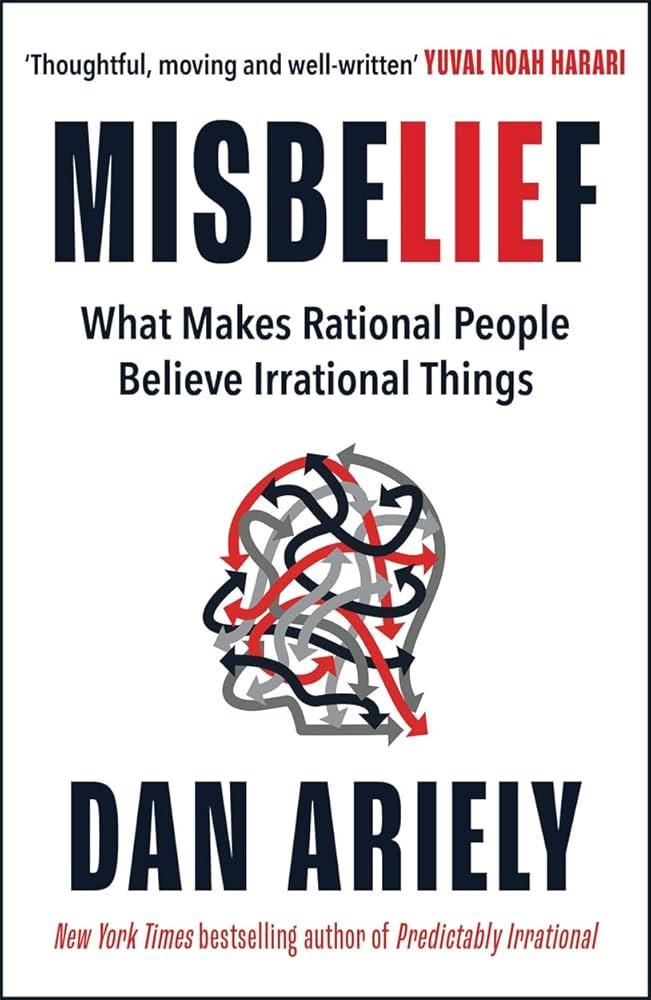
The renowned social scientist, professor, and bestselling author of Predictably Irrational delivers his most urgent and compelling book: an eye-opening exploration of the human side of the misinformation crisis, examining what drives otherwise rational people to adopt deeply irrational beliefs.
“Timely… a crucial foundation for building a more empathetic and informed society.” – Daniel H. Pink
“An important book for those who want to understand… the increasingly complex world.” – Arianna Huffington
How do we distinguish between fact and fiction in a post-truth world?
The rise of fake news and AI-generated deep fakes have created a crisis of trust, making it more difficult than ever to know when we are being misled.
Renowned social scientist Dan Ariely explores how the concept of misbelief can lead anyone to doubt established truth and embrace conspiracy theories. Drawing upon his first-hand experience of being the subject of disinformation, Ariely investigates the psychological drivers and motives behind irrational beliefs and what we do to counter them.
An urgent call-to-action, Misbelief uncovers how we can stem the tide of misbelief with an empathetic and tolerant approach and restore trust in society.
1 in stock
Misbelief: What Makes Rational People Believe Irrational Thi
Misbelief: What Makes Rational People Believe Irrational Thi Book Description
Readers will discover why even the smartest minds sometimes hold false ideas. This book is written by Dan Ariely, the bestselling author of Predictably Irrational and a leading social scientist. He shares personal encounters with disinformation and explains how fake news, deep‑fakes, and conspiracy theories spread. Meanwhile, the narrative stays clear and engaging, making complex psychology feel accessible. Therefore, anyone curious about today’s misinformation crisis will enjoy an evidence‑based exploration.
Fans of behavioral science will enjoy Ariely’s blend of story and research. Throughout the chapters, he reveals hidden biases that push people toward irrational belief. Additionally, he offers practical steps to recognize and counter these mental traps. Moreover, the book encourages empathy, suggesting that tolerating differing views can rebuild trust. Consequently, readers walk away with insight and tools to navigate a post‑truth world.
Key Features of Misbelief: What Makes Rational People Believe Irrational Thi
The guide includes real‑world examples of misinformation campaigns that affected governments and individuals. Inside, Ariely examines the role of emotion, social pressure, and identity in shaping belief. Furthermore, each section ends with clear takeaways that help readers apply the concepts to daily life. The writing style stays lively, avoiding jargon while still delivering solid research. Because of this balance, the book serves both scholars and casual readers.
Readers can also explore a personal narrative of the author being targeted by false claims. This experience adds authenticity and shows how easily even experts can become victims. Meanwhile, the author outlines strategies such as fact‑checking, perspective‑taking, and community dialogue. These methods are presented as simple actions anyone can start using today. Therefore, the book not only explains the problem but also empowers action.
Why Read This Book?
Many readers ask how to tell fact from fiction. This book delivers a clear, research‑backed answer. It helps people develop healthy skepticism without becoming cynical. Additionally, the empathetic approach fosters conversation rather than conflict. Fans of Dan Ariely will recognize his signature humor and curiosity. Moreover, educators can use the insights to teach critical thinking in classrooms. Because the ideas are presented in short, digestible sections, the book fits busy schedules while still offering depth.
Finally, the book serves as a timely resource for anyone worried about AI‑generated deep fakes and viral rumors. It shows that rational thinking is possible even in a chaotic information landscape. By the end, readers will feel more confident in evaluating claims and supporting an informed society.
About This Book
More detail about this book and author can be found on Goodreads. Also discover the best English books online in our store through this link.
Only logged in customers who have purchased this product may leave a review.
Product Related


EGP495.00

Out of stock
EGP780.00

Out of stock
EGP1,630.00
Reviews
There are no reviews yet.