

Modernist Beirut


Modernist Beirut
EGP6,650.00
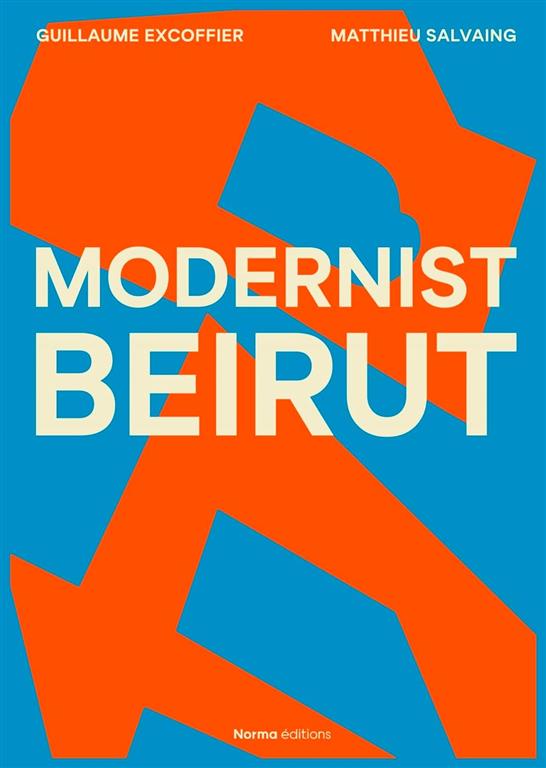
From the 1950s, Beirut and Lebanon have been a veritable laboratory of architectural modernity in the Middle East, calling on the greatest national and international architects. Institutions and large Lebanese companies have turned to concrete and so-called brutalist forms, participating fully in the renewal of world architecture.
If Lebanon gave birth to a flowering of exemplary buildings of this period, this work is an invitation to discover more than thirty, often unknown and admirably captured by the gaze by Matthieu Salvaing.
By their selection, the authors invite the reader to follow in their footsteps at the heart of the various modernist experiences who crossed Lebanon as so many testimonies of an international and generous vision.
Public commissions, such as the emblematic Tripoli International Fair built by Oscar Niemeyer or the Ministry of Defense of André Wogenscky, with private villas such as those created by Henri Edde, passing by the Interdesign building of Khalil Khoury, this work is the celebration of a history happy with Lebanon, rooted in modernity and open to the world.
Out of stock
Modernist Beirut
Modernist Beirut Book Description
Modernist Beirut invites readers to explore Lebanon’s golden age of architecture, a period that began in the 1950s. The book shows how Beirut became a laboratory for modern design, attracting renowned local and international architects. It captures the spirit of a nation that embraced concrete, brutalism, and innovative forms, placing Lebanon at the heart of a worldwide architectural renewal.
Inside, you will discover more than thirty buildings that many readers have never seen. Photographer Matthieu Salvaing presents each structure with striking images that highlight texture, light, and detail. The selection covers public landmarks and private villas, giving a balanced view of the era’s diversity. Readers can walk through iconic sites such as Oscar Niemeyer’s Tripoli International Fair and André Wogenscky’s Ministry of Defense, while also enjoying the elegance of Henri Edde’s private residences.
Meanwhile, the narrative traces how Lebanese institutions and large firms adopted modernist ideas. Companies commissioned concrete façades and bold geometries, signaling a confident embrace of global trends. Furthermore, the book reveals how architects like Khalil Khoury blended local culture with international styles, creating a unique Lebanese modernism that still inspires today.
Key Features of Modernist Beirut
Each chapter pairs vivid photography with concise, accessible commentary. Readers will learn the historical context of every project in just a few paragraphs. Additionally, the book includes maps that pinpoint each building’s location, making it easy to plan a personal tour of Beirut’s modernist trail.
The content is organized by theme—public commissions, residential designs, and experimental structures—so you can compare different approaches side by side. Moreover, the authors provide biographies of the architects, allowing you to connect the buildings with the people who imagined them.
Finally, the publication offers a glossary of key architectural terms. This helps newcomers understand concepts such as “brutalism” and “modular design” without feeling overwhelmed. The result is a reader‑friendly guide that feels both scholarly and enjoyable.
Why Read This Book?
Fans of travel, photography, and design will find a rich source of inspiration within these pages. The book encourages you to see Beirut not only as a historic city but also as a living gallery of modernist art. Because the photographs are high‑resolution, you can study details that most guidebooks overlook.
Readers can also gain insight into how political and cultural shifts shaped the built environment. The story demonstrates that architecture reflects a nation’s ambitions, hopes, and challenges. Therefore, “Modernist Beirut” offers more than visual pleasure; it provides a deeper understanding of Lebanon’s place in world architecture.
Many readers appreciate the blend of visual and textual content, which makes learning both quick and enjoyable. Moreover, the book serves as a perfect coffee‑table addition for anyone who loves beautiful spaces and compelling stories.
About This Book
For more details about “Modernist Beirut” and its authors, visit the Goodreads page. Discover additional English titles and expand your library by exploring the best selections at Kalimat Bookstore Online.
| Author |
|---|
Only logged in customers who have purchased this product may leave a review.
Product Related

Out of stock
EGP585.00

Out of stock
EGP455.00

Out of stock
EGP605.00

EGP680.00
Reviews
There are no reviews yet.