

Taposiris Magna: A Temple, Fortress, and Monastery of Egypt

Taposiris Magna: A Temple, Fortress, and Monastery of Egypt
EGP450.00
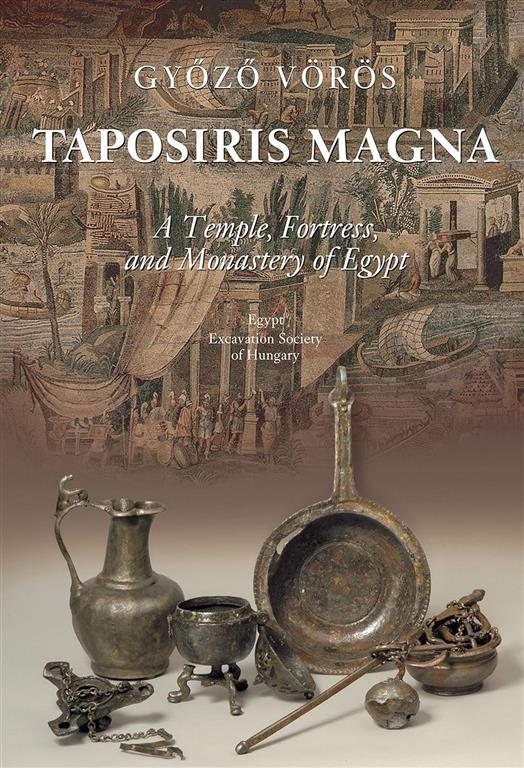
The coastal acropolis of Taposiris Magna, 45 km west of Alexandria on Egypt’s north coast, was founded by Ptolemy Philadelphos II in the early third century BC. Between 1998 and 2004, Hungarian excavations, led by charismatic archaeologist Gyozo Vörös, revealed many of the hidden secrets of the history of this important site. Within the Egyptian-style pylons and enclosure walls, the team discovered the foundations of a Greek-style sanctuary―the only Greek temple so far found in Egypt. That sanctuary was carefully and deliberately dismantled in the Roman period in order to turn the whole temple into a garrisoned fortress: columns from the sanctuary were used to heighten the enclosure walls. Later, at the end of the fourth century, a Christian basilica was constructed inside the fortress complex, and the temple became a monastery. This fully illustrated book reveals all the discoveries of the Hungarian excavations at this remarkably protean site, including plans and reconstructions of the Greek sanctuary and the Byzantine basilica, as well as a series of stunning finds: a beautiful basalt statue of Isis, a cache of Roman bronze cultic paraphernalia, and a hoard of Byzantine gold coins and jewelry.
3 in stock
Taposiris Magna: A Temple, Fortress, and Monastery of Egypt
Taposiris Magna: A Temple, Fortress, and Monastery of Egypt Book Description
Readers will be drawn into the fascinating story of Taposiris Magna: A Temple, Fortress, and Monastery of Egypt, an illustrated English volume now available at Kalimat Bookstore Online. This book explores a coastal acropolis that lies 45 km west of Alexandria, founded by Ptolemy Philadelphos II in the early third century BC. It invites you to travel through centuries of history, from Greek worship to Roman military use and finally to Byzantine monastic life.
The author follows the Hungarian excavations carried out between 1998 and 2004 under the leadership of archaeologist Gyozo Vörös. Meanwhile, the team uncovered the foundations of Egypt’s only known Greek‑style sanctuary hidden within massive Egyptian pylons. The discovery reshaped our understanding of cultural exchange in the ancient Mediterranean.
Later, the sanctuary was deliberately dismantled during the Roman period. Columns were repurposed to raise the enclosure walls, transforming the sacred space into a fortified garrison. Furthermore, at the close of the fourth century, a Christian basilica rose within the stronghold, turning the former temple into a thriving monastery. This layered history makes Taposiris Magna a unique case study of adaptation and reuse.
Key Features of Taposiris Magna: A Temple, Fortress, and Monastery of Egypt
Inside the book you will find detailed plans and accurate reconstructions of the Greek sanctuary and the later Byzantine basilica. Additionally, vivid photographs showcase stunning artifacts such as a basalt statue of Isis, a cache of Roman bronze cultic objects, and a treasure trove of Byzantine gold coins and jewelry. The visuals help readers visualize each construction phase and understand the site’s evolving role.
Each chapter combines scholarly research with accessible prose, making complex archaeological findings easy to follow. Moreover, the author explains how the Roman modifications altered the original Greek design, providing insight into ancient engineering practices. Readers can also explore the social and religious implications of the monastery’s emergence during the early Christian era.
Why Read This Book?
Fans of ancient history will enjoy the clear, engaging narrative that brings Taposiris Magna to life. The book offers a rare glimpse into a location where Greek, Roman, and Byzantine cultures intersected on Egyptian soil. Because the author balances academic rigor with storytelling, the text appeals both to scholars and casual history enthusiasts.
Furthermore, the richly illustrated pages enhance the reading experience. Throughout the volume, maps and artist’s renderings guide you through the site’s transformation over nearly a millennium. The collection of artifacts presented in high‑resolution images invites you to examine each piece as if you were on the excavation floor.
Finally, this work highlights the importance of interdisciplinary research. By merging archaeology, architecture, and religious studies, the book demonstrates how a single site can reveal broader patterns of cultural exchange and adaptation.
About This Book
More detail about this book and its author can be found on Goodreads. Also discover the best English books online in our store through this link. Experience the captivating journey of Taposiris Magna and add this essential volume to your collection today.
| Author |
|---|
Only logged in customers who have purchased this product may leave a review.
Product Related

Out of stock
EGP425.00
Out of stock
EGP2,655.00

Out of stock
EGP275.00

EGP880.00
Reviews
There are no reviews yet.