

Why Nations Fail
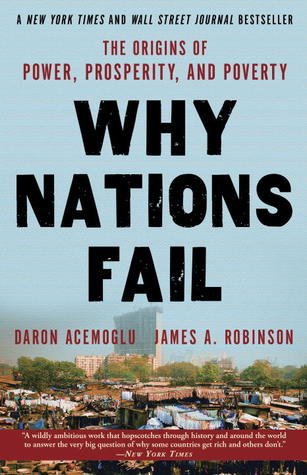


Why Nations Fail
Not available on global market
Why Nations Fail
Overview of Why Nations Fail
Why Nations Fail by Daron Acemoglu and James A. Robinson explores why some countries prosper while others remain trapped in poverty. The book argues that political and economic institutions determine a nation’s success or failure. Inclusive institutions encourage innovation, investment, and fairness. In contrast, extractive institutions concentrate power and wealth in the hands of a few, leaving societies unstable and poor.
Language: English
ISBN-10: 9780307719225
ISBN-13: 9780307719225
Genre: History & Social Sciences
Condition: New
More detail about this book and author can check this link also Discover the Best English Books Online in our store through this link
Why Nations Fail
Overview of Why Nations Fail
Why Nations Fail by Daron Acemoglu and James A. Robinson explores why some countries prosper while others remain trapped in poverty. The book argues that political and economic institutions determine a nation’s success or failure. Inclusive institutions encourage innovation, investment, and fairness. In contrast, extractive institutions concentrate power and wealth in the hands of a few, leaving societies unstable and poor.
The authors use historical and global examples to support their claims. From the rise of the Roman Empire to modern struggles in Africa and Latin America, they show how institutions shape destiny. Importantly, they argue that culture, geography, or ignorance are not the main reasons for poverty. Instead, the rules of the game—who holds power and how it is used—decide the future of nations.
Key Ideas in Why Nations Fail
The book emphasizes the difference between inclusive and extractive systems. Inclusive systems give citizens freedom, equal rights, and opportunities to succeed. They promote innovation and growth. Meanwhile, extractive systems focus on control, exploitation, and short-term power. These systems block progress and often lead to conflict.
Another key idea is the “vicious circle” and “virtuous circle.” Bad institutions reinforce themselves, keeping countries trapped in poverty. On the other hand, strong inclusive institutions create stability and lasting growth. Transition moments—such as revolutions or reforms—can break these cycles, but only if they establish fair systems.
Lessons from Why Nations Fail
Readers gain practical insights about leadership, governance, and change. The book shows why foreign aid alone cannot fix failing nations. It also explains why democracy matters, but only when paired with fair institutions. Furthermore, it highlights the role of citizens in demanding accountability.
Ultimately, Why Nations Fail challenges readers to see success not as luck or geography, but as a result of choices and power structures. It is both an explanation of the past and a guide for shaping the future.
Language: English
ISBN-10: 9780307719225
ISBN-13: 9780307719225
Genre: History & Social Sciences
Condition: New
More detail about this book and author can check this link also Discover the Best English Books Online in our store through this link
| Author |
|---|
Only logged in customers who have purchased this product may leave a review.
Product Related

Out of stock
Not available on global market

Not available on global market

Not available on global market

Out of stock
Not available on global market
Reviews
There are no reviews yet.