

If Babel had a Form: Translating Equivalence in the Twentieth-Century Transpacific


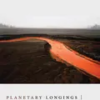
If Babel had a Form: Translating Equivalence in the Twentieth-Century Transpacific
EGP3,796.00
If Babel had a Form: Translating Equivalence in the Twentieth-Century Transpacific
If Babel had a Form: Translating Equivalence in the Twentieth-Century Transpacific Book Description
Readers will discover If Babel had a Form: Translating Equivalence in the Twentieth-Century Transpacific at Kalimat Bookstore Online, where the book offers a fresh look at translation across Chinese, English, and other languages. The author, Tze‑Yin Teo, asks what happens when form aligns while meaning diverges. Meanwhile, the work traces how early‑twentieth‑century translators broke political and cultural barriers, shaping a new kind of literary exchange.
The story highlights Ernest Fenollosa’s 1906 claim that Chinese and English share a “likeness of form.” However, the book shows that this similarity creates surprising challenges for translators. Throughout the chapters, Teo examines writers such as Hu Shi, Eileen Chang, Theresa Cha, and Yang Lian, revealing how they forged poetic equivalence beyond colonial expectations. Additionally, the conclusion revisits debates on untranslatability, suggesting that true equivalence remains complex and rewarding.
Key Features of If Babel had a Form: Translating Equivalence in the Twentieth-Century Transpacific
Fans of literary theory will enjoy the book’s transpacific case studies, which blend history, poetry, and cultural criticism. Moreover, each chapter provides clear examples of how translators used sound and shape to bridge languages without losing artistic intent. Readers can also explore how the notion of equivalence was reclaimed as a tool for radical, anti‑colonial expression.
Furthermore, the text includes vivid excerpts from primary sources, allowing readers to experience the original poetry and prose. Meanwhile, the author’s analytical framework is accessible, making complex ideas understandable for both scholars and general readers. This balance of depth and readability sets the book apart in contemporary translation studies.
Why Read This Book?
Many readers seek books that challenge conventional thinking about language. This work delivers by questioning the colonial roots of “equivalence” and offering a fresh, poetic alternative. Because the author connects historical moments with present‑day concerns, the book feels relevant to anyone interested in cultural exchange.
Additionally, the reading experience is both intellectually stimulating and emotionally resonant. Throughout, Teo illuminates the subtle power of “sameness” in translation, showing how tiny echoes can reshape identities. Therefore, readers who value nuanced storytelling and critical insight will find this book both rewarding and inspiring.
About This Book
More detail about this book and its author can be found on Goodreads. Also, discover the best English books online in our store through this Kalimat Bookstore link.
Be the first to review “If Babel had a Form: Translating Equivalence in the Twentieth-Century Transpacific”
Product Related
EGP1,050.00
Out of stock

Out of stock
EGP360.00
EGP215.00
Reviews
There are no reviews yet.