

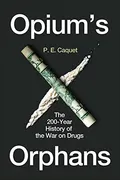
Opium’S Orphans: The 200-Year History of the war on Drugs

Opium’S Orphans: The 200-Year History of the war on Drugs
Opium’S Orphans: The 200-Year History of the war on Drugs Book Description
Readers will discover a fresh look at the “war on drugs” in this engaging English volume available at Kalimat Bookstore Online. The book traces the anti‑narcotics movement from its accidental birth in China to its worldwide expansion. It challenges the common belief that the conflict started in Europe or the United States. Instead, it shows how two Opium Wars and later Western attempts at redemption created a global prohibition system.
Throughout the narrative, the author explores how drug policies evolved over two centuries. The story uncovers the hidden motives behind early bans, the rise of modern enforcement, and the costly consequences that followed. Meanwhile, readers gain insight into why opioid deaths and cartel violence continue to surge despite decades of strict laws. The book also examines the growing call for reform, including the push to legalize marijuana in many countries.
Fans of history and social policy will enjoy the balanced, no‑holds‑barred account that blends rigorous research with vivid storytelling. Additionally, the work highlights the paradox of a system born from accident rather than rational design. Moreover, it asks a crucial question: has the war on drugs ever succeeded? The answer invites readers to rethink long‑standing assumptions and consider new pathways forward.
Key Features of Opium’S Orphans
Each chapter combines clear timelines with compelling anecdotes, making complex history easy to follow. The author uses active language to help readers explore cause and effect without getting lost in jargon. Furthermore, the book includes rare primary sources that illustrate how officials once justified prohibition. Readers can also enjoy sidebars that summarize pivotal moments, such as the 1912 International Opium Convention and the 1971 UN Declaration.
Inside the pages, you will find a comparative analysis of drug policies across continents. This section demonstrates why policies that work in one region often fail in another. Additionally, the book provides visual maps that trace the spread of anti‑narcotic legislation from Asia to the Americas. These tools help readers visualize the global impact of early decisions.
Why Read This Book?
The guide offers a clear, concise history that is both informative and thought‑provoking. Many readers appreciate how the author links past events to today’s debates over opioid crises and legalization efforts. Therefore, the book serves as a valuable resource for students, policymakers, and anyone curious about why current laws exist. Moreover, the narrative style makes the material accessible to a broad audience, not just scholars.
Because the author presents both successes and failures, readers can form their own opinions about future reforms. The book encourages critical thinking and invites discussion about alternative approaches to drug regulation. Consequently, it becomes more than a history—it is a call to action for a more humane and effective policy framework.
About This Book
More detail about this book and its author can be found on Goodreads. Also, discover the best English books online in our store through this link. Enjoy a compelling reading experience and gain a deeper understanding of the forces that shaped the modern war on drugs.
Be the first to review “Opium’S Orphans: The 200-Year History of the war on Drugs”
Product Related

EGP1,050.00

Out of stock

Out of stock
EGP360.00

EGP215.00
Reviews
There are no reviews yet.