

Republic (Wordsworth Classics of World Literature)
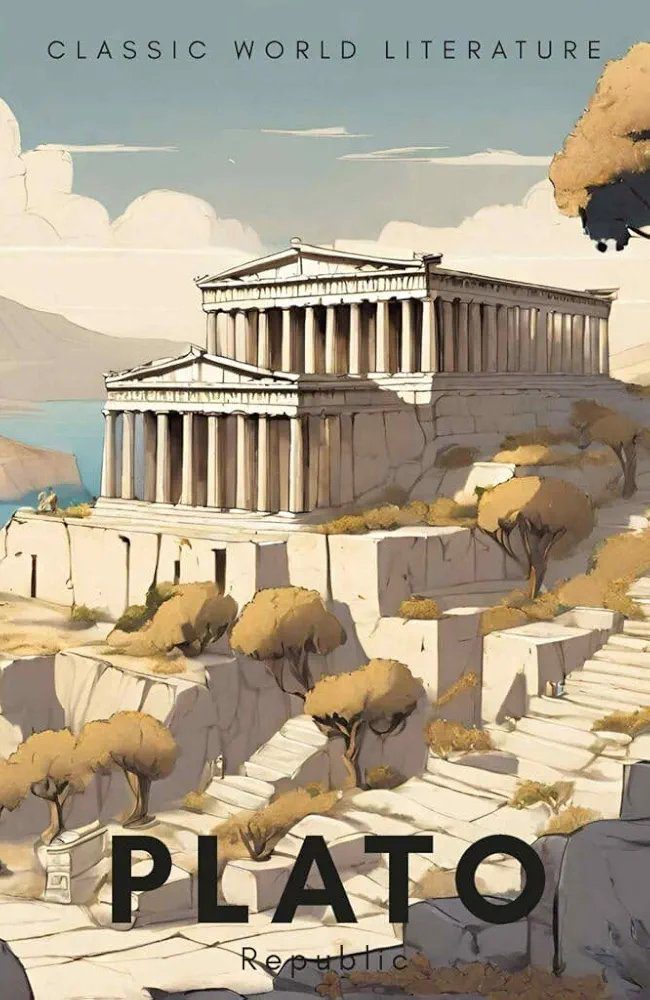

Republic (Wordsworth Classics of World Literature)
EGP455.00
Republic by Plato – Summary and Key Insights
Introduction
Republic by Plato is a foundational work of philosophy. It explores justice, the ideal state, and human virtue. Moreover, it has influenced thinkers for centuries and remains a classic of world literature.
The Question of Justice
At the heart of Republic is the question: What is justice? Through Socratic dialogues, Plato examines how individuals and societies can live rightly. In addition, he argues that justice occurs when everyone fulfills the role for which they are best suited.
The Ideal State
Plato describes an ideal state governed by philosopher-kings. Furthermore, he introduces the tripartite nature of the soul and emphasizes that education and knowledge are key to achieving true justice. He contrasts appearance with reality, showing that understanding the Forms leads to wisdom.
Language: English
Paperback: 400 pages
Publisher: Wordsworth Editions Ltd (1999)
ISBN-10: 1853264830
ISBN-13: 9781853264832
Genre: Philosophy
Size: 12.7 cm x 19.3 cm
Condition: New
More detail about this book and author can check this link also Discover the Best English Books Online in our store through this link
12 in stock
Republic by Plato – Summary and Key Insights
Introduction
Republic by Plato is a foundational work of philosophy. It explores justice, the ideal state, and human virtue. Moreover, it has influenced thinkers for centuries and remains a classic of world literature.
The Question of Justice
At the heart of Republic is the question: What is justice? Through Socratic dialogues, Plato examines how individuals and societies can live rightly. In addition, he argues that justice occurs when everyone fulfills the role for which they are best suited.
The Ideal State
Plato describes an ideal state governed by philosopher-kings. Furthermore, he introduces the tripartite nature of the soul and emphasizes that education and knowledge are key to achieving true justice. He contrasts appearance with reality, showing that understanding the Forms leads to wisdom.
Dialogue and Structure
The book is presented as a series of dialogues, making complex ideas more accessible. Each section focuses on a specific theme, such as justice, governance, education, or the role of philosophers in society. Consequently, readers are guided step by step through Plato’s reasoning.
The Allegory of the Cave
One of the most famous parts of Republic is the Allegory of the Cave. Here, Plato illustrates how humans often live in ignorance, perceiving only shadows of reality. In contrast, true knowledge comes through reasoning and grasping eternal truths beyond appearances.
Why Read Republic
Reading Republic helps readers think critically about morality, governance, and knowledge. Additionally, it offers timeless insights into human nature and the foundations of a just society. Its lessons remain relevant even today.
Language: English
Paperback: 400 pages
Publisher: Wordsworth Editions Ltd (1999)
ISBN-10: 1853264830
ISBN-13: 9781853264832
Genre: Philosophy
Size: 12.7 cm x 19.3 cm
Condition: New
More detail about this book and author can check this link also Discover the Best English Books Online in our store through this link
| Author |
|---|
Only logged in customers who have purchased this product may leave a review.
Product Related

EGP6,000.00

Out of stock

Out of stock
EGP630.00
Out of stock
EGP1,040.00
Reviews
There are no reviews yet.